
A tooth that suddenly starts throbbing at dinner or wakes you up at 2 a.m. can be easy to brush off at first. But when is tooth pain serious? In many cases, tooth pain is your body telling you that something needs attention now, not next month when your schedule opens up.
Some toothaches come from mild irritation that can wait a day or two for an exam. Others point to infection, nerve damage, gum disease, a cracked tooth, or a dental emergency that should be treated as soon as possible. Knowing the difference can help you protect your health, avoid worsening pain, and often save the tooth.
When is tooth pain serious enough to call right away?
A good rule is this: if the pain is intense, getting worse, or coming with other symptoms, do not ignore it. Tooth pain becomes more serious when it lasts more than a day or two, interferes with eating or sleeping, or is paired with swelling, fever, a bad taste in the mouth, or pain when biting down.
Those symptoms often suggest more than simple sensitivity. They can mean the inside of the tooth is inflamed or infected, the tooth is cracked, or the infection has moved into the gums or surrounding bone. Dental infections do not usually resolve on their own. They tend to spread, and the longer you wait, the more complex treatment can become.
If you are unsure, it is safer to call and describe what you are feeling. A caring dental team can help you understand whether you need same-day care or the next available appointment.
Signs your tooth pain should not wait
Some symptoms deserve prompt attention because they raise concern for infection or structural damage. Severe throbbing pain is one. Pain that pulses, worsens when you lie down, or seems to spread into the jaw, ear, or head often means the nerve inside the tooth is involved.
Swelling is another red flag. If your cheek, jaw, or gums look puffy, or if a gum bump appears near the painful tooth, there may be an abscess. An abscess is a pocket of infection, and it needs professional treatment.
Fever is especially important. Tooth pain plus fever can mean the infection is no longer confined to the tooth itself. Difficulty swallowing, trouble opening your mouth, or swelling that affects your face or under your jaw makes the situation more urgent.
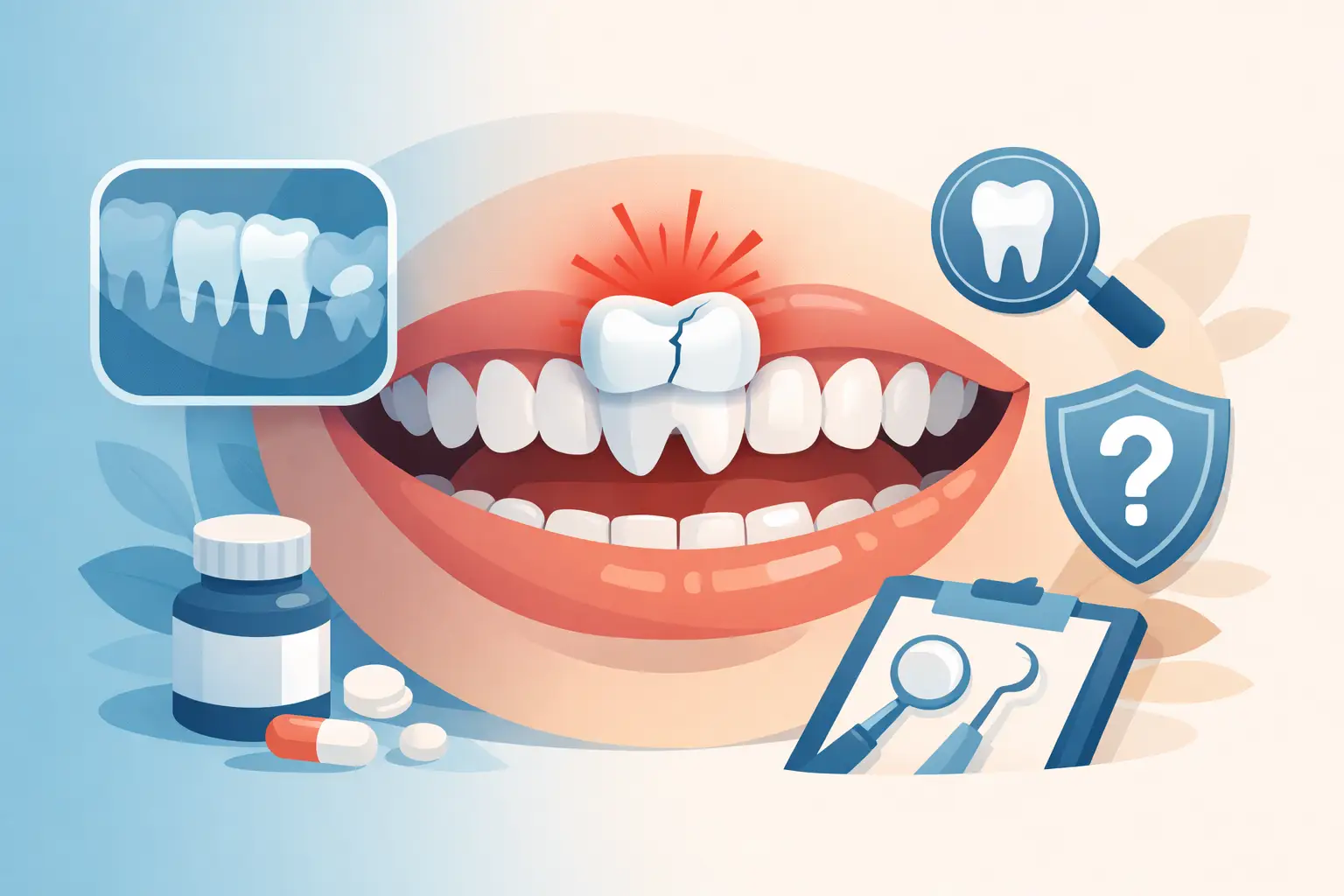
A cracked or broken tooth can also be serious even if it does not look dramatic. Small cracks can expose sensitive inner layers of the tooth or create a path for bacteria. If pain starts after biting something hard, after an injury, or only when you chew, a crack may be the reason.
Bleeding or painful gums should not be ignored either, especially if the pain feels more widespread than one tooth. Gum infection and advanced periodontal disease can cause tenderness, swelling, and pain that patients sometimes mistake for a toothache.
Common causes of tooth pain
Not every toothache means the same thing. Tooth decay is one of the most common causes. A cavity may start with brief sensitivity to sweets or cold drinks, then progress to lingering pain as decay moves deeper into the tooth.
An infected or inflamed pulp, the soft tissue inside the tooth that contains nerves and blood vessels, often causes stronger pain. This can happen when decay is deep, after trauma, or when a crack lets bacteria inside. In some cases, root canal treatment is the best way to remove infection and relieve pain while preserving the natural tooth.
Gum disease can also create pain, especially if there is swelling or a periodontal abscess. Impacted food between teeth, teeth grinding, sinus pressure, and erupting wisdom teeth may cause discomfort too. The challenge is that these problems can feel surprisingly similar at home. That is one reason a professional exam matters.
When is tooth pain serious if it comes and goes?
Pain that is not constant can still be a problem. In fact, intermittent pain sometimes leads people to delay care because they assume the issue is improving. A cavity, crack, or nerve problem may flare up only with hot, cold, pressure, or sweets at first. That pattern does not mean it is minor. It often means the problem is still progressing.
If the pain disappears completely, that is not always reassuring either. In some cases, a dying nerve stops sending pain signals even though infection remains. Patients are often surprised to learn that less pain does not always mean better health.
The safest approach is to pay attention to what triggers the discomfort and how long it lasts. Brief sensitivity after whitening or very cold foods may be less urgent. Pain that lingers, returns repeatedly, or gets stronger over time deserves an exam.
Symptoms that point to an emergency
Some dental symptoms should be treated as urgent because they can affect more than your mouth. Call right away if you have facial swelling, fever, pus near the tooth, a knocked-out or badly broken tooth, uncontrolled bleeding, or severe pain after trauma.
You should also seek prompt care if you cannot eat, sleep, or function normally because of the pain. For children, sudden swelling, visible gum bumps, or crying with chewing should be taken seriously as well.
For families and busy adults, it is tempting to wait for a more convenient time. The trade-off is that delaying care can turn a treatable cavity into a root canal, a crown, or even an extraction. Fast attention often means simpler treatment, lower cost, and less disruption.
What you can do before your appointment
While you are waiting to be seen, a few steps may help you stay more comfortable. Rinse gently with warm salt water to keep the area clean. If there is swelling, place a cold compress on the outside of the cheek in short intervals. Over-the-counter pain relievers may help if you can take them safely as directed.
Try to avoid chewing on the painful side. Very hot, very cold, sugary, or hard foods may aggravate the area. Keep your head slightly elevated if throbbing seems worse when lying down.
It is best not to place aspirin directly on the gums or tooth. That can irritate soft tissue and does not treat the cause. Home remedies may take the edge off, but they do not remove decay, drain infection, or repair a crack.
What a dentist will look for
At your visit, the goal is not only to stop the pain but to find the true source. A dentist may check for cavities, fractures, loose fillings, gum infection, bite problems, or signs of an abscess. X-rays are often useful because many serious problems are hidden below the surface.
Treatment depends on the cause. Sometimes a filling is enough. In other cases, you may need a crown, deep cleaning, root canal treatment, extraction, or antibiotics if infection is present. The right treatment is the one that solves the reason for the pain, not just the symptom.
At Amor Dental Arts, many patients come in worried that tooth pain automatically means losing a tooth. Often, that is not the case. Early diagnosis gives you more options and a better chance of preserving your oral health with less invasive care.
The bottom line on when tooth pain is serious
If a tooth hurts mildly for a moment after ice cream, that may not be an emergency. If the pain is strong, persistent, triggered by biting, paired with swelling or fever, or simply feels wrong, it is time to call. Tooth pain is one of those symptoms that rarely gets better through wishful thinking.
You do not have to figure it out alone or wait until it becomes unbearable. Listening to pain early is often the kindest thing you can do for yourself and your family, because relief usually starts with getting answers.