Waking up tired after a full night in bed can affect far more than your morning routine. Loud snoring, gasping during sleep, dry mouth, morning headaches, and daytime fatigue may point to obstructive sleep apnea. For some patients, a custom sleep apnea dental device offers a comfortable, practical way to support better breathing at night – without relying on a bulky mask.
At Amor Dental Arts, we approach sleep-related treatment with the same caring attention we bring to every aspect of oral health. Your comfort matters, but so does making sure treatment is appropriate for your individual needs.
What Is a Sleep Apnea Dental Device?
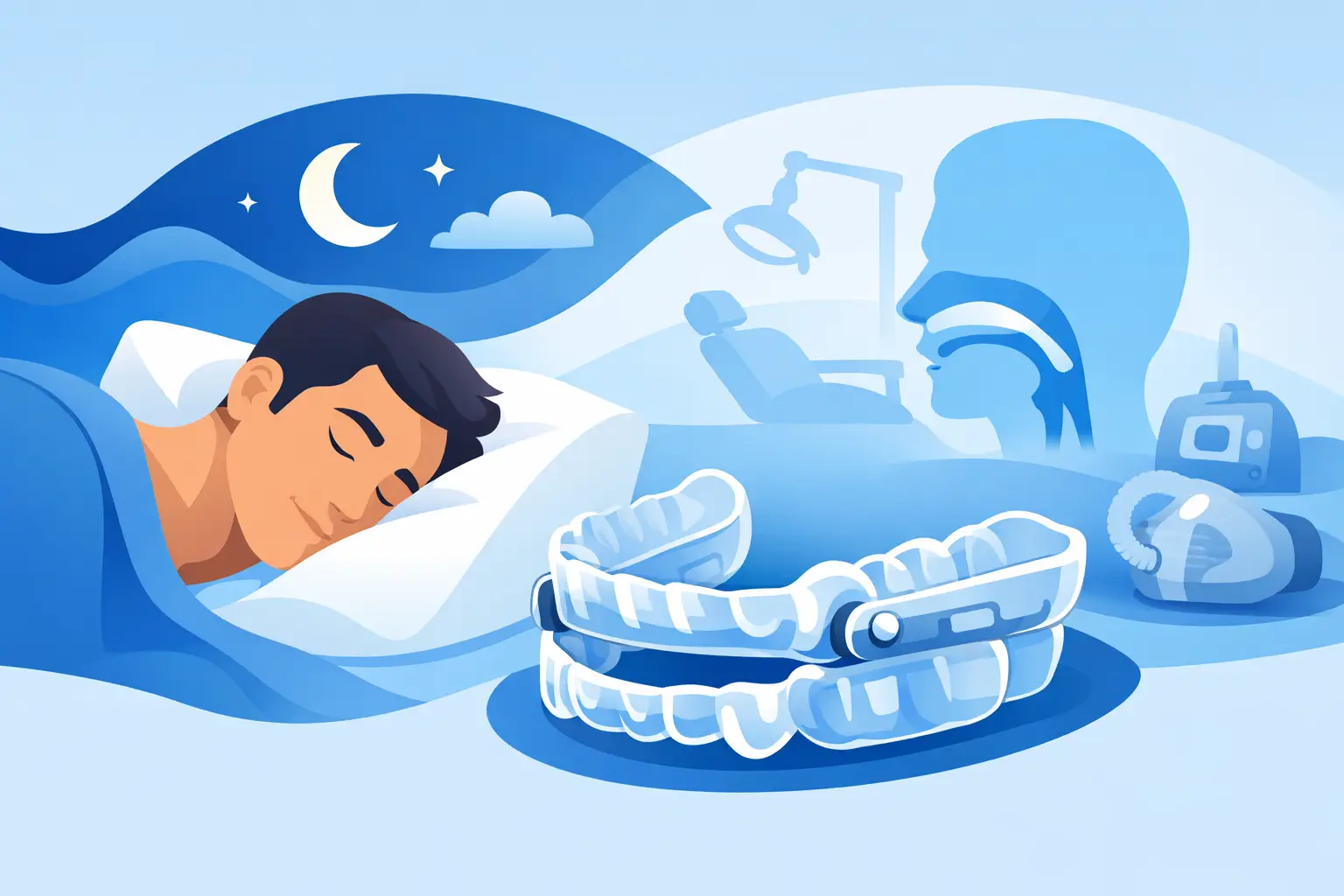
A sleep apnea dental device, also called an oral appliance or sleep apnea mouth guard, is a custom-made appliance worn while you sleep. It is different from a sports mouth guard and should not be confused with an over-the-counter snoring product.
The most common type is a mandibular advancement device. It fits over the upper and lower teeth and gently positions the lower jaw slightly forward. That small adjustment can help keep the tongue and soft tissues from narrowing the airway during sleep. With more room for air to move, snoring and breathing interruptions may be reduced.
Another type, called a tongue-retaining device, holds the tongue in a forward position. These may be considered in certain situations, though custom mandibular advancement appliances are more commonly used for patients who have enough healthy teeth to support them.
A properly fitted appliance is designed around your bite, teeth, jaw position, and comfort needs. That personalization is one reason a dentist-guided device is very different from a one-size-fits-all product sold online.
Who May Benefit From a Sleep Apnea Dental Device?
Oral appliance therapy may be recommended for adults with mild to moderate obstructive sleep apnea. It can also be an option for people with severe sleep apnea who cannot tolerate CPAP therapy, although CPAP is often the preferred treatment for more severe cases because it can be highly effective at keeping the airway open.
A dental device may be worth discussing if you have been diagnosed with obstructive sleep apnea and find a CPAP mask difficult to wear consistently. Some people struggle with mask leaks, claustrophobia, skin irritation, travel inconvenience, or simply the challenge of sleeping with equipment attached. A smaller, portable oral appliance can feel more manageable for the right patient.
Snoring alone does not automatically mean you need a dental appliance. Snoring can occur without sleep apnea, while sleep apnea can involve health risks that deserve a proper evaluation. A sleep physician or qualified medical provider should diagnose sleep apnea, often through a sleep study, before treatment decisions are made.
Why a Sleep Study Comes First
Obstructive sleep apnea occurs when the upper airway repeatedly narrows or closes during sleep. These pauses can lower oxygen levels and interrupt restorative rest, even if you do not remember waking up. Left untreated, sleep apnea may be associated with high blood pressure, heart concerns, poor concentration, mood changes, and increased accident risk from drowsiness.
A sleep study helps identify whether sleep apnea is present and how serious it is. It also helps your care team determine whether an oral appliance is appropriate or whether another treatment should be prioritized. This collaborative approach protects your health while giving you clear, realistic options.
How the Custom Appliance Process Works
Getting a sleep apnea dental device is not a one-visit purchase. It is a carefully planned process that begins with understanding your medical diagnosis, sleep concerns, dental health, and treatment goals.
Your dentist will examine your teeth, gums, bite, jaw joints, and the overall condition of your mouth. Healthy teeth and stable gum support are important because the appliance uses your teeth to hold the jaw in position. If you have untreated cavities, gum disease, significant tooth mobility, or jaw pain, those concerns may need attention first.
Once you are a candidate, digital scans or impressions are taken to create an appliance that fits precisely. At the delivery visit, your dentist checks the fit and explains how to wear, clean, and store it. The device is usually adjusted gradually rather than moved aggressively all at once. This allows the jaw to advance in small increments while your provider monitors comfort and response.
Follow-up visits matter. You may need adjustments to improve effectiveness, manage pressure points, or address changes in your bite. Your sleep physician may recommend follow-up testing to confirm that the appliance is controlling the apnea, not simply reducing the sound of snoring.
Benefits and Trade-Offs to Consider
Many patients appreciate that an oral appliance is quiet, compact, and easy to bring on trips. There is no electricity, tubing, or mask. For busy working adults and frequent travelers, those practical advantages can make it easier to follow treatment consistently.
Comfort is another potential benefit. A custom device is made for your mouth and can be adjusted over time. Still, “custom” does not mean every patient will love it immediately. It can take time to adapt to sleeping with an appliance, just as it can take time to adapt to CPAP.
Possible side effects include temporary tooth pressure, jaw soreness, dry mouth, excess saliva, or changes in how the teeth meet in the morning. Some patients with temporomandibular joint concerns need extra evaluation because advancing the jaw may aggravate symptoms. Long-term bite changes are possible for some patients, which is why regular dental follow-up is part of responsible treatment.
The best treatment is not simply the smallest device or the fastest option. It is the treatment that effectively addresses your diagnosed condition and that you can use consistently. For some people, that is CPAP. For others, it is an oral appliance. In certain cases, a physician may recommend a combination of approaches, along with weight management, positional changes, or treatment for nasal obstruction.
Why Store-Bought Snoring Guards Are Not the Same
Boil-and-bite products and generic anti-snoring guards may seem convenient, but they are not designed from a complete dental and medical assessment. They can fit poorly, shift the jaw unevenly, irritate gums, or create unwanted tooth movement. More importantly, they cannot confirm that your airway is being treated effectively.
A professionally made appliance is selected and adjusted with your bite, jaw health, and diagnosed sleep condition in mind. It is also part of a coordinated plan that includes communication with your medical provider. When your health and sleep quality are involved, that level of care is worth considering.
Caring for Your Oral Appliance
Daily care helps your device stay clean, comfortable, and functional. Rinse it after each use, gently brush it with a soft toothbrush and non-abrasive cleaner, and allow it to dry in its protective case. Hot water can warp many appliance materials, so use cool or lukewarm water unless your dentist gives different instructions.
Bring your appliance to regular dental visits. Your dentist can inspect it for wear, check your bite and jaw comfort, and make adjustments before small issues become larger ones. Continue brushing, flossing, and attending preventive visits as usual. A clean, healthy mouth supports a more comfortable appliance experience.
Questions to Ask Before Starting Treatment
Before moving forward, ask whether your sleep study supports oral appliance therapy, what type of device is recommended, and how your progress will be evaluated. It is also reasonable to ask about expected adjustment time, potential side effects, follow-up visits, replacement needs, and insurance coverage.
If you wake unrefreshed, your partner notices pauses in your breathing, or snoring is disrupting your household, do not dismiss it as a minor inconvenience. A conversation with your medical provider and dentist can turn uncertainty into a clear plan. Better sleep can begin with a thoughtful evaluation, a well-made appliance when appropriate, and a care team that listens closely to what you need.