A first tooth can arrive with plenty of fanfare: photos, a tiny toothbrush, maybe a new bedtime routine. A dental visit should follow sooner than many parents expect. If you have searched “when should kids see dentist,” the short answer is by their first birthday or within six months of the first tooth coming in, whichever happens first.
That early appointment is not about expecting a child to sit through a long cleaning. It is a chance to make sure teeth and gums are developing well, discuss feeding and brushing habits, and help your child see the dental office as a familiar, safe place. For families in Norristown, building that comfort early can make future care much easier.
When should kids see a dentist for the first time?
The American Academy of Pediatric Dentistry recommends a first dental visit by age 1. This may seem early, particularly if your child only has one or two teeth. Yet cavities can begin soon after teeth erupt, and early childhood cavities can progress quickly in baby teeth.
At this first visit, the dentist will gently examine your child’s mouth, teeth, gums, bite, and jaw development. Parents can also get practical answers about fluoride, brushing, thumb-sucking, pacifier use, bottle habits, and healthy snacks. It is often a short, low-pressure visit designed around what your child can comfortably manage.
Starting early does not mean every child will need treatment. In many cases, the biggest benefit is prevention. A small concern spotted early may be addressed with home-care changes, fluoride recommendations, or closer monitoring instead of more involved care later.
Why baby teeth deserve real attention
Baby teeth hold space for permanent teeth, support clear speech, and help children chew comfortably as they explore new foods. When a baby tooth is lost too early because of decay or injury, nearby teeth can shift. That can affect the room available for adult teeth.
Just as importantly, untreated tooth pain can make eating, sleeping, and concentrating at school harder. Children do not always say, “My tooth hurts.” They may avoid chewy foods, favor one side of the mouth, become irritable at meals, or wake at night. Routine visits give parents a trusted place to ask about these changes before they become urgent.
How often should children go to the dentist?
After the first visit, many children benefit from checkups about every six months. That schedule is common because it allows the dental team to track rapid changes in growing mouths, reinforce brushing habits, and spot early signs of decay.
Still, every child is different. A dentist may recommend more frequent visits when a child has a history of cavities, weak enamel, orthodontic concerns, dry mouth, certain medical conditions, or trouble keeping teeth clean. A child with excellent oral health may need only the standard preventive schedule. The right plan should feel individualized, not one-size-fits-all.
As children get older, these appointments may include professional cleanings, fluoride treatments, dental X-rays when clinically appropriate, and conversations about sealants. Sealants are thin protective coatings placed in the deep grooves of back teeth, where food and bacteria can be difficult for young brushers to remove. They are not a substitute for brushing and flossing, but they can add meaningful protection for cavity-prone molars.
Signs your child should be seen sooner
Do not wait for the next routine appointment if something feels off. A prompt evaluation can often prevent a painful problem from becoming more complicated. Call a dentist if your child has a toothache, facial or gum swelling, a chipped or broken tooth, a loose tooth after an injury, bleeding that does not stop, or a mouth sore that does not heal.
Dark spots, white chalky areas near the gumline, visible holes, persistent bad breath, or sensitivity to cold and sweets also deserve attention. White spots can be an early sign that enamel is losing minerals. At that stage, a dentist may have more conservative options than after a cavity has formed.
Dental injuries need quick attention, especially after a fall, sports accident, or playground collision. If a permanent tooth is knocked out, handle it only by the crown, not the root. If possible, gently place it back in the socket or keep it in milk while you seek emergency dental care right away. Do not try to reinsert a knocked-out baby tooth, as this may harm the developing permanent tooth.
What happens at a child’s dental appointment?
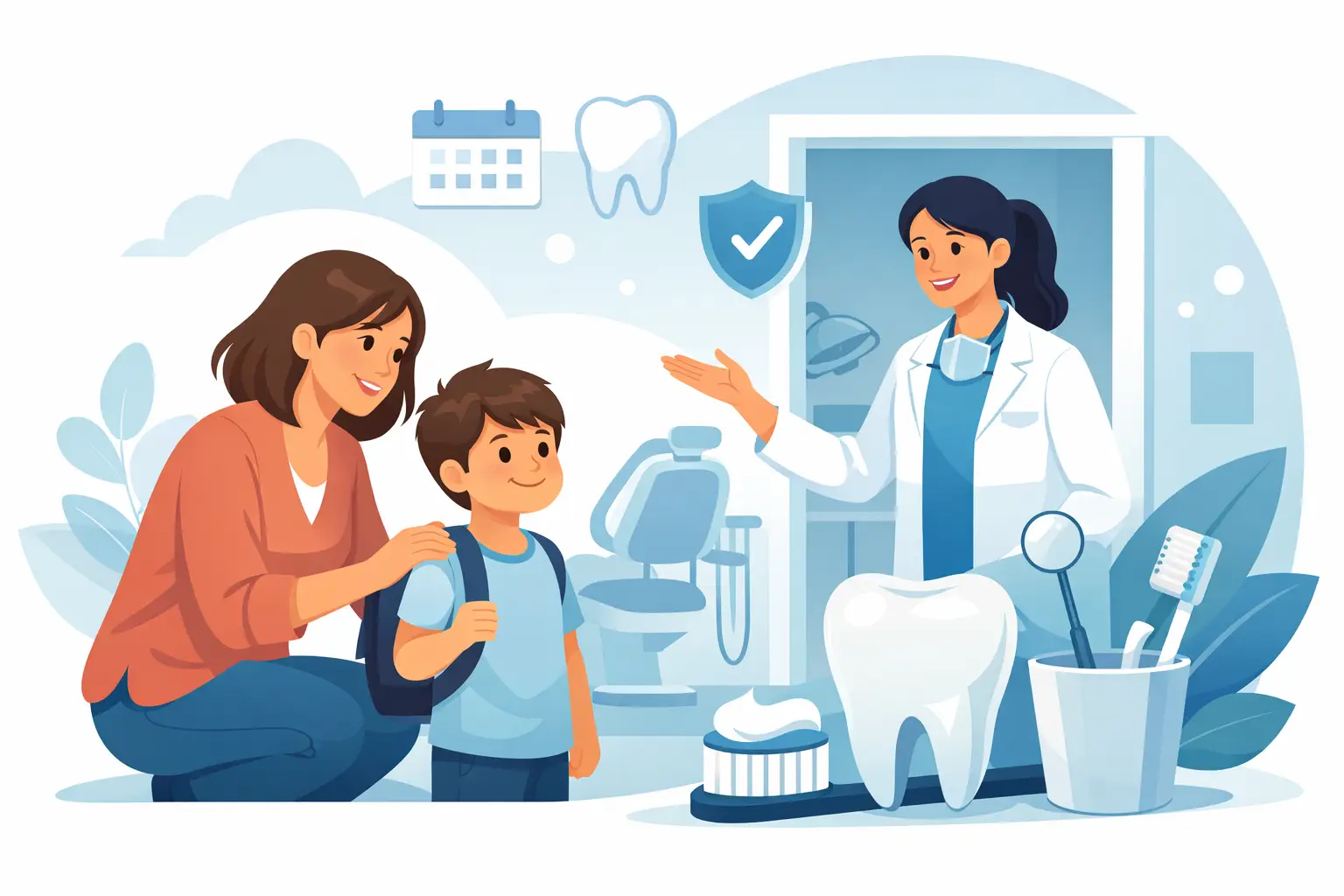
A caring pediatric visit moves at your child’s pace. For infants and toddlers, a parent may hold the child during the exam. The dentist may count teeth, check the gums and bite, and show you the best way to clean newly erupted teeth. Older children can usually sit in the chair independently and take part in the conversation.
The goal is never to rush a nervous child through an unfamiliar experience. Dental teams can use simple, age-appropriate language, explain what will happen before it happens, and offer encouragement throughout the visit. A child who needs time to warm up is not “being difficult.” They are learning that dental care can be predictable and safe.
At Amor Dental Arts, families can receive preventive, restorative, orthodontic, and emergency care in one welcoming practice. That continuity can be especially reassuring when a child who has come in for routine checkups later needs additional attention.
How parents can make the first visit easier
Your preparation can shape the tone of the appointment. Speak about the dentist calmly and positively, but avoid making promises such as, “Nothing will hurt.” A better approach is to say that the dentist will count their teeth, help keep their smile strong, and explain each step.
Try to schedule the visit when your child is usually rested and fed, rather than near naptime or after a long school day. Bring a comfort item for younger children if it helps. Let the dental team know beforehand if your child has sensory sensitivities, developmental needs, medical concerns, or a previous difficult healthcare experience. These details help the team adapt the visit with more patience and clearer communication.
Parents should also resist using the dentist as a threat. Phrases like “If you eat candy, the dentist will give you a shot” can create fear before a child has even walked through the door. Instead, connect dental care to everyday routines: brushing twice daily with a fluoride toothpaste amount appropriate for their age, helping younger children floss where teeth touch, drinking water regularly, and limiting frequent sugary drinks or snacks.
Dental milestones to watch as kids grow
The first years are focused on healthy habits and cavity prevention. Around age 6, children usually begin getting their first permanent molars and losing baby teeth. These new molars can look like they appeared “too far back” overnight, so they are easy to miss while brushing. They also have grooves that may make them more susceptible to decay.
During elementary school and the teen years, the dentist will also monitor bite development, crowding, jaw growth, and wisdom tooth development. Orthodontic evaluations are often helpful by age 7, even if braces are not needed yet. An early evaluation does not commit a child to treatment. It simply gives parents a clearer view of how the teeth and jaws are developing.
For children who play contact sports, ask about a custom mouth guard. A properly fitted guard can help protect teeth, lips, and jaws more effectively than a loose store-bought option. This is one of those small preventive steps that can matter greatly in a split-second accident.
A healthy start is built one visit at a time
Your child does not need a perfect smile or a dental problem to deserve their first appointment. They need a calm introduction to care, guidance that fits their stage of development, and a dental team that listens to both parent and child. Scheduling that first visit now can turn an unfamiliar milestone into a comfortable family routine.