A straighter smile can change more than a photo. It can make brushing easier, support a healthier bite, and help you feel more confident speaking, laughing, and meeting new people. When comparing Invisalign vs traditional braces, the right answer is rarely about which option is universally better. It is about which treatment can safely and predictably address your needs while fitting your daily life.
For a busy parent, a working professional, or a teen with a full school calendar, the practical details matter. Appearance, food restrictions, comfort, treatment time, cost, and the ability to stay on track all deserve an honest conversation before you begin.
Invisalign vs Traditional Braces: The Main Difference
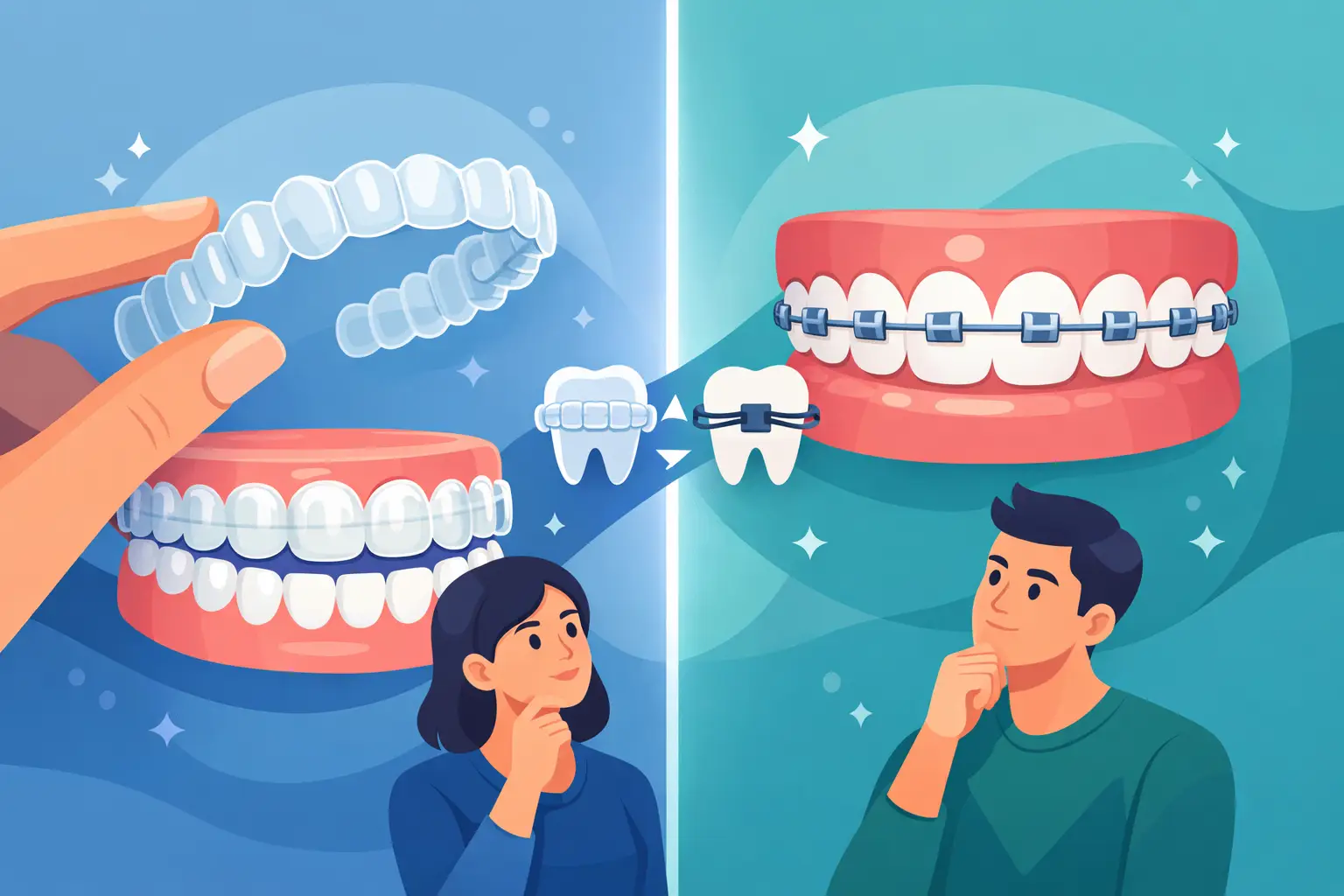
Traditional braces use brackets bonded to the teeth and connected by a wire. Your dentist or orthodontic provider adjusts the wire over time to guide teeth into healthier positions. They are fixed in place, which means they work around the clock without relying on you to remember to wear them.
Invisalign treatment uses a series of custom-made, clear removable aligners. Each set is worn for a prescribed period, usually one to two weeks, before moving to the next set. The aligners apply gentle, controlled pressure to shift teeth gradually. Small tooth-colored attachments may be placed on certain teeth to give the aligners a better grip and improve movement.
Both options can create excellent results. The deciding factor is the complexity of your bite and tooth movement, along with your ability to follow treatment instructions.
When Invisalign May Be the Better Fit
Clear aligners are popular because they are subtle. Most people will not notice them in normal conversation, making them especially appealing for adults and older teens who prefer a less noticeable orthodontic option.
They are also removable. You take aligners out to eat and drink anything other than water, then brush and floss before putting them back in. That means no need to avoid popcorn, nuts, chewy candy, or crusty bread simply because you are in treatment. For patients who value flexibility at meals and want to keep their usual oral hygiene routine, this can be a meaningful advantage.
Comfort is another reason many patients ask about Invisalign. Aligners have smooth edges and no wires or brackets to rub against the cheeks and lips. You may feel pressure when switching to a new tray, which is a normal sign that teeth are moving, but there are fewer chances for a poking wire to create irritation.
Clear aligners do require consistency. For treatment to work as planned, they generally need to be worn about 20 to 22 hours a day. Taking them out for long stretches, forgetting to replace them after a meal, or losing trays can slow progress. Invisalign is often an excellent choice for a responsible teen or adult, but it is not ideal for someone who knows they may struggle with that routine.
What Invisalign Can Treat
Invisalign can address many common concerns, including mild to moderate crowding, spacing, some bite concerns, and teeth that have shifted after previous orthodontic treatment. It can also be a strong option for adults who want to improve their smile without the appearance of metal braces.
However, clear aligners are not automatically the best choice for every case. Significant rotations, severely displaced teeth, complex jaw-related bite problems, and certain types of vertical tooth movement may be more predictable with braces or may require a combination approach. A careful exam and digital imaging are necessary to determine what will deliver a healthy, stable result.
When Traditional Braces May Be the Better Choice
Traditional braces remain a trusted treatment because of their precision and versatility. Since brackets are attached to the teeth, your provider has continuous control over tooth movement. This is especially valuable for patients with more complex crowding, major bite concerns, impacted teeth, or movements that require close control.
They can also be a practical choice for younger patients. Children and teens do not have to remember to put braces back in after lunch or sports practice. Once braces are placed, treatment is always working. That built-in consistency can reduce the risk of delays caused by missed wear time.
Modern braces are more comfortable and streamlined than many people remember. Brackets are generally smaller, and adjustments are planned around your individual progress. Some patients also enjoy choosing colored elastics, while others prefer more discreet options when available.
The trade-off is that braces require more care during meals and brushing. Hard, sticky, and crunchy foods can damage brackets or wires. Cleaning takes extra attention because food and plaque can collect around the brackets. A water flosser, interdental brush, and a little extra patience can make a substantial difference.
Braces Often Offer More Control for Complex Bites
Orthodontic treatment is not only about straight front teeth. Your bite affects how you chew, how your teeth meet, and in some cases how easily you can keep teeth clean. When a case involves a pronounced overbite, underbite, crossbite, open bite, or substantial crowding, fixed braces can give the provider more precise control throughout treatment.
That does not mean braces are always required for complex care. Clear aligner technology has expanded considerably, and some challenging cases can be treated successfully with aligners. The key is choosing a treatment plan based on your clinical needs, not simply on which appliance seems more convenient.
Comparing Daily Life, Cost, and Treatment Time
The best orthodontic option should work for your real routine, not an idealized version of it. Invisalign allows you to remove trays for meals, brushing, special events, and contact sports, but that freedom comes with responsibility. Aligners should be stored safely in their case whenever they are out of your mouth. Wrapping them in a napkin is one of the most common ways they get thrown away.
Braces stay put, which simplifies compliance but adds daily restrictions. You will need to plan around foods that can bend wires or loosen brackets. If a bracket breaks or a wire becomes uncomfortable, contact your dental office promptly so the issue can be addressed and your treatment stays on course.
Cost varies widely with the complexity of your case, estimated treatment length, the type of appliance, insurance coverage, and whether additional procedures are needed. Invisalign is not always more expensive, and braces are not always less expensive. The only reliable way to compare costs is to receive a personalized treatment recommendation and a clear estimate of what is included. Ask about payment options and how insurance benefits may apply before making a decision.
Treatment time also depends more on the starting condition of your teeth and your cooperation than on the name of the appliance. Some cases take several months, while others take considerably longer. With Invisalign, wear time is essential. With braces, keeping scheduled adjustment visits and avoiding appliance damage helps prevent unnecessary delays.
Oral Hygiene Matters With Either Choice
Straightening teeth is an investment in your smile and your oral health, but orthodontic treatment does not replace preventive care. Teeth still need thorough brushing twice daily, daily cleaning between teeth, and regular dental checkups.
With Invisalign, remove the trays before brushing and flossing. Clean the aligners as directed, and avoid putting them back over teeth that have not been cleaned after a meal. Sugary drinks and hot beverages should not be consumed while wearing aligners, since they can stain, warp, or trap sugar against the teeth.
With braces, spend time cleaning above and below the wire, around every bracket, and along the gumline. Fluoride toothpaste can help protect enamel, particularly for patients who are prone to cavities. Regular professional cleanings are especially valuable while braces are in place.
The Question to Ask at Your Consultation
Rather than asking only, “Which one is faster?” ask, “Which option will give me the healthiest, most predictable result for my bite and lifestyle?” A thoughtful consultation should include an evaluation of your teeth, gums, bite, jaw function, medical and dental history, and goals for your smile.
At Amor Dental Arts, patients can discuss orthodontic concerns in a comfortable, family-focused setting and receive guidance that is tailored to their needs. You should leave the visit understanding the recommended option, the expected commitment, how to care for your teeth during treatment, and what your financial options look like.
Whichever path you choose, the final step matters just as much: wearing your retainer. Teeth naturally tend to shift over time, and a retainer protects the time, effort, and investment behind your new smile. Start with a conversation, ask every question you have, and choose the treatment you can follow confidently from the first day to the last.