
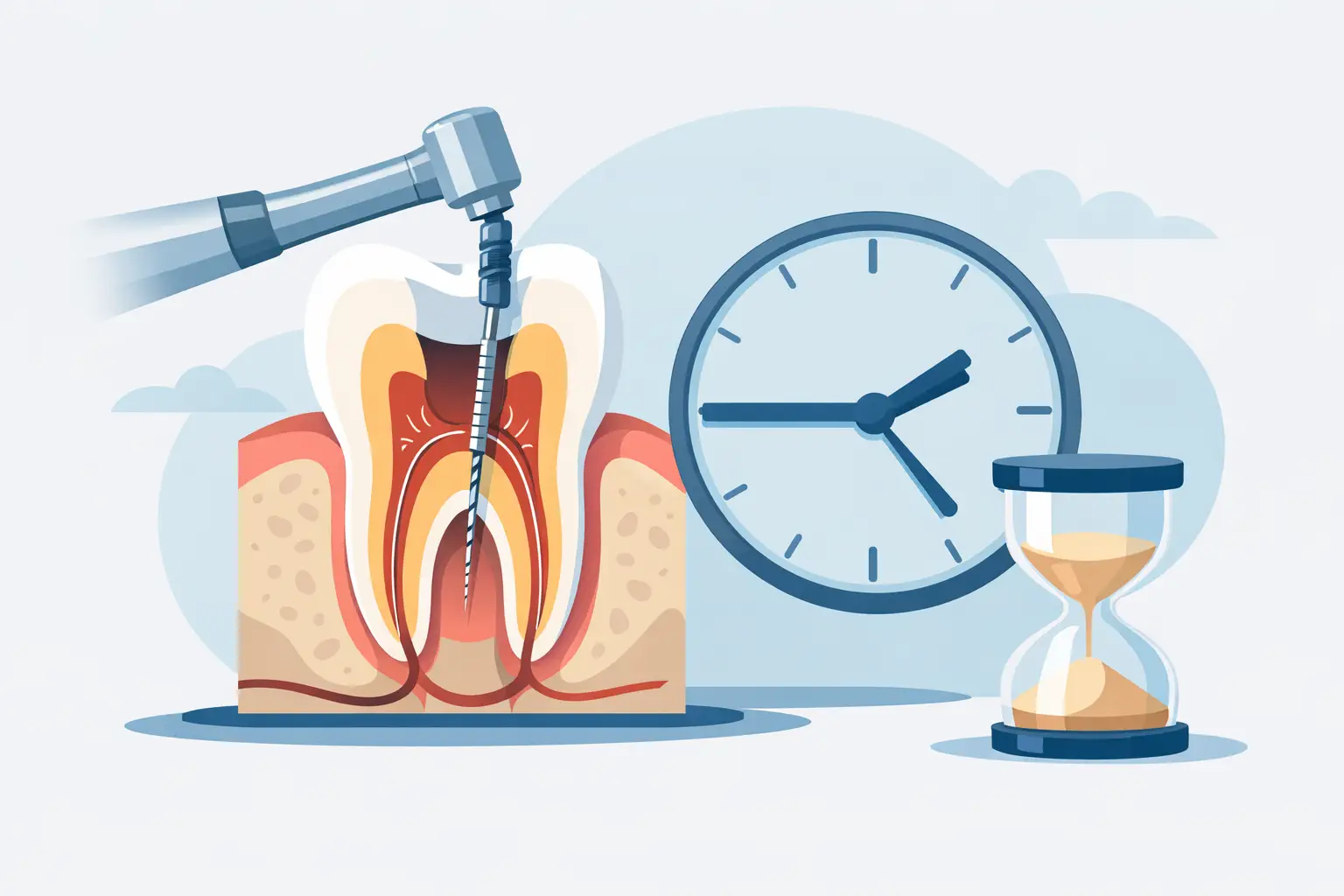
If you have been told you need a root canal, the first question on your mind may not be about the procedure itself. It is often much simpler: how long does a root canal take, and how much of your day should you plan around it? The short answer is that many root canals take about 60 to 90 minutes, but the real answer depends on which tooth is being treated, how much infection is present, and whether the tooth needs more than one visit.
That uncertainty can feel stressful, especially if you are already dealing with pain, swelling, or a busy work and family schedule. The good news is that root canal treatment is a very routine procedure, and with modern techniques, it is often far more comfortable and efficient than patients expect.
How long does a root canal take on average?
For many patients, a root canal appointment lasts between one and one and a half hours. In some straightforward cases, treatment can be completed in less time. In more complex cases, it may take closer to 90 minutes or require a second appointment.
Front teeth usually take the least amount of time because they tend to have one root canal. Premolars may take a bit longer. Molars usually take the longest because they often have three or four canals that must be carefully cleaned, shaped, and sealed.
So if you are wondering how long does a root canal take, the most accurate answer is this: it depends on the tooth and the condition of the infection, but many cases are completed in one visit.
What affects root canal treatment time?
The biggest factor is the tooth itself. A front tooth is generally simpler to treat than a molar in the back of the mouth. Molars have more roots, and their canals can be narrow, curved, or harder to access. That makes treatment more detailed and naturally takes longer.
The extent of infection also matters. If the tooth has significant inflammation, a deep infection, or an abscess, your dentist may need additional time to clean the area thoroughly. In some cases, medication is placed inside the tooth between visits before the final seal is completed.
Another factor is whether this is a first-time root canal or a retreatment. If a tooth has already had root canal therapy in the past and needs to be treated again, the process is usually more complex. Removing old filling material and addressing hidden anatomy can extend the appointment.
Your comfort needs can also affect timing. Patients who feel anxious may benefit from a slower pace, breaks during treatment, or sedation options. That extra time is often well worth it if it helps you feel calm and cared for throughout the visit.
One visit or two?
Many root canals can be completed in one appointment. That is often the case when the tooth is easy to access, the infection is limited, and the canals can be cleaned and sealed without complications.
Two visits may be recommended when the infection is more severe, when the anatomy of the tooth is more complicated, or when the tooth needs time to settle before it is permanently sealed. In that situation, your dentist may place a temporary filling after the first appointment and finish the treatment at the second visit.
Neither approach is automatically better. The right timing depends on what gives the tooth the best chance of healing and long-term success.
What happens during the appointment?
Knowing the steps can make the time feel less intimidating. A root canal typically begins with numbing the area so you stay comfortable. Once the tooth is fully numb, a small protective barrier is placed around it to keep the area clean and dry.
Your dentist then creates an opening in the tooth to reach the infected or damaged pulp inside. The canals are carefully cleaned out, shaped, and disinfected. After that, the canals are filled with a specialized material that seals the space and helps prevent reinfection.
If the root canal is completed in one visit, the tooth is usually sealed the same day with a temporary or permanent restoration, depending on the treatment plan. In many cases, the tooth will later need a crown to protect it, especially if it is a back tooth that handles heavy chewing pressure.
Does the crown happen at the same appointment?
Not always. This is one reason some patients feel confused about how long the whole process takes. The root canal itself may take around 60 to 90 minutes, but the full restoration of the tooth can involve a separate step.
A crown is often recommended after a root canal because the tooth can become more brittle over time, especially if a large portion of the original tooth structure is already damaged. Some offices place a temporary filling after the root canal and then schedule the crown appointment later. Others may begin the crown process sooner, depending on the condition of the tooth and available technology.
If your schedule is tight, it helps to ask not only about the root canal appointment length, but also about the full treatment timeline from start to finish.
Will it hurt, and does pain make it take longer?
Most patients are relieved to learn that root canals are done to stop pain, not create it. With local anesthesia and modern dental techniques, the procedure itself is usually no more uncomfortable than getting a filling. You may feel pressure or vibration, but you should not feel sharp pain.
If the tooth is extremely inflamed, getting the area fully numb can sometimes take a little longer. That does not mean anything is wrong. It simply means your dentist is taking the time to make sure you are comfortable before starting treatment.
Afterward, some soreness is normal for a few days, especially when chewing. This is typically manageable with over-the-counter pain relief or medication prescribed by your dentist. Severe pain after treatment is not typical and should be evaluated.
Can a root canal be done faster in an emergency?
If you come in with severe tooth pain or swelling, emergency treatment may focus first on relieving pressure and infection. In some cases, that means the full root canal can be completed the same day. In others, the immediate goal is to stabilize the tooth, reduce pain, and complete the final treatment soon after.
That is why same-day dental availability can matter so much. When a tooth is infected, waiting too long can increase discomfort and make treatment more involved. Prompt care often helps protect both your time and your tooth.
How to plan your day after a root canal
Most people can return to work, school, or normal activity the same day, especially if they did not receive sedation. Your mouth may stay numb for a few hours, so it is smart to avoid chewing until the feeling comes back.
If the treated tooth feels tender, choose softer foods for a day or two and chew on the opposite side if possible. If your dentist placed a temporary filling or temporary crown, follow those instructions carefully. That temporary material is doing an important job until the final restoration is completed.
For busy parents and working adults, the practical answer is reassuring: while the procedure may take around an hour or a little more, it usually does not mean losing several days of your routine.
When to call sooner rather than later
A tooth that needs a root canal does not always start with dramatic pain. Sometimes the signs are subtle, like lingering sensitivity to hot or cold, pain when biting, swelling near the gums, or a darkened tooth. In other cases, the pain is intense and hard to ignore.
The sooner the tooth is evaluated, the better. Early treatment can sometimes make the process more straightforward and may reduce the chances of infection spreading or the tooth becoming harder to save. For families in and around Norristown, having a local dental office that can explain options clearly and treat urgent problems quickly can make a difficult situation feel much more manageable.
If you are asking how long does a root canal take, you are probably also asking something deeper: how soon can I feel normal again? In many cases, relief starts once the infection is treated, and that peace of mind is often worth far more than the hour on the schedule.