When chewing feels uneven, teeth are breaking down one by one, or you avoid smiling because too much has changed over time, the problem usually is not just one tooth. This is where full mouth restoration options come into focus. Instead of patching issues as they pop up, a full-mouth approach looks at how your teeth, gums, bite, jaw comfort, and long-term health all work together.
For many patients, that idea brings relief. It means there is a plan. Whether the damage comes from decay, missing teeth, grinding, gum disease, old dental work, trauma, or years of wear, treatment can be built around your health, budget, timeline, and comfort level.
What full mouth restoration really means
A full mouth restoration is a customized treatment plan used to repair or replace multiple teeth and restore the overall function of your mouth. It is not one procedure. It is a combination of treatments selected to help you bite comfortably, protect your remaining teeth, support your gums, and improve appearance as a result of better oral health.
Some patients need extensive rebuilding because they have several missing teeth. Others still have most of their teeth, but those teeth may be heavily worn, cracked, infected, or unsupported by unhealthy gums. In both cases, the goal is the same – create a healthier, more stable foundation.
That is why no honest dentist should present one universal answer. The right treatment depends on how many teeth are affected, the condition of the gums and bone, whether infection is present, and how important factors like cost, healing time, and maintenance are to you.
Common full mouth restoration options
Dental crowns for damaged or weakened teeth
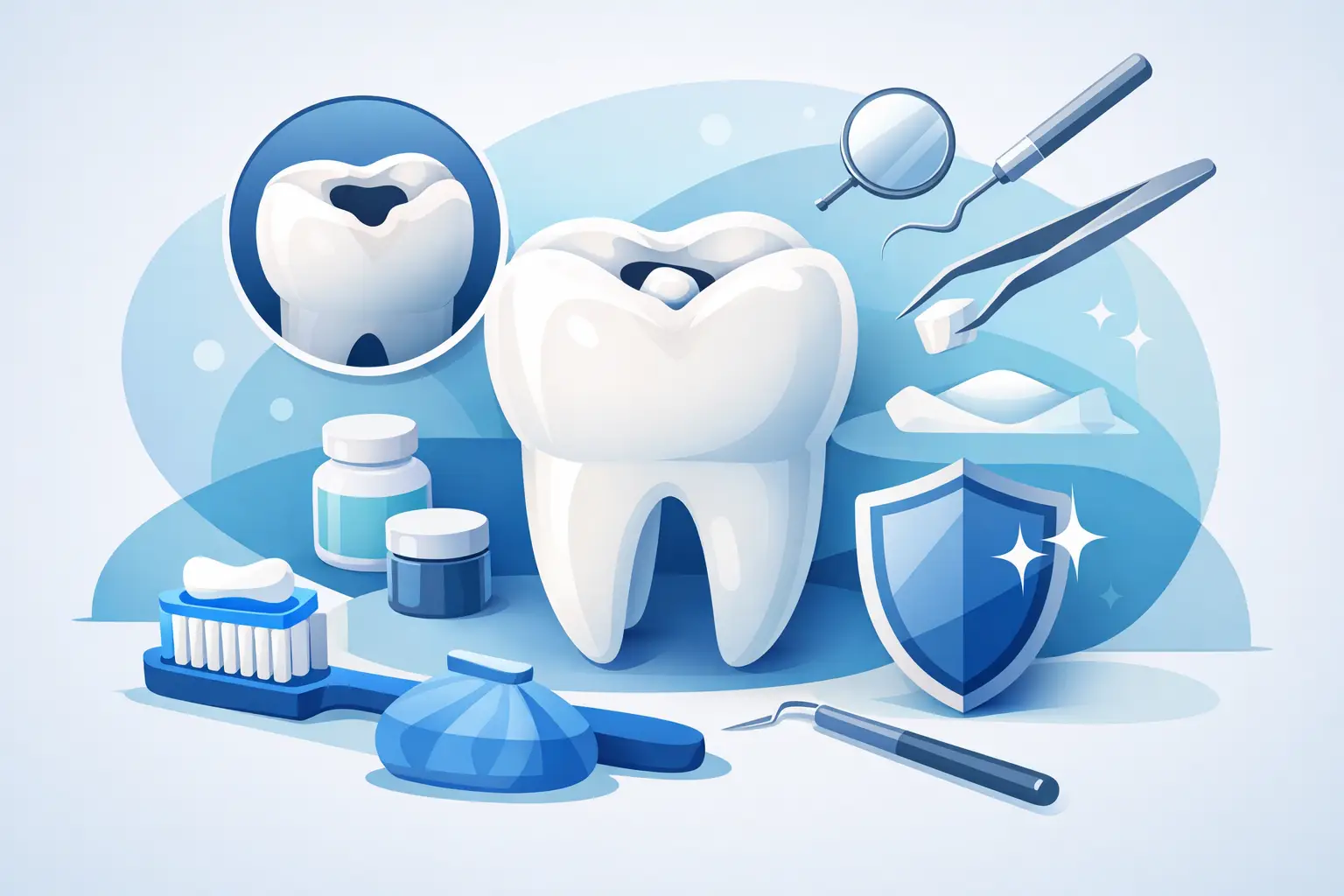
Crowns are often part of a full-mouth plan when teeth can still be saved but need stronger protection. A crown covers the visible part of a tooth and can restore shape, strength, and chewing function.
This option works well for teeth that are cracked, heavily filled, worn down, or treated with root canal therapy. Crowns can be excellent for preserving natural teeth, but they depend on having enough healthy tooth structure underneath. If a tooth is too damaged or the surrounding support is poor, another option may make more sense.
Bridges to replace one or several missing teeth
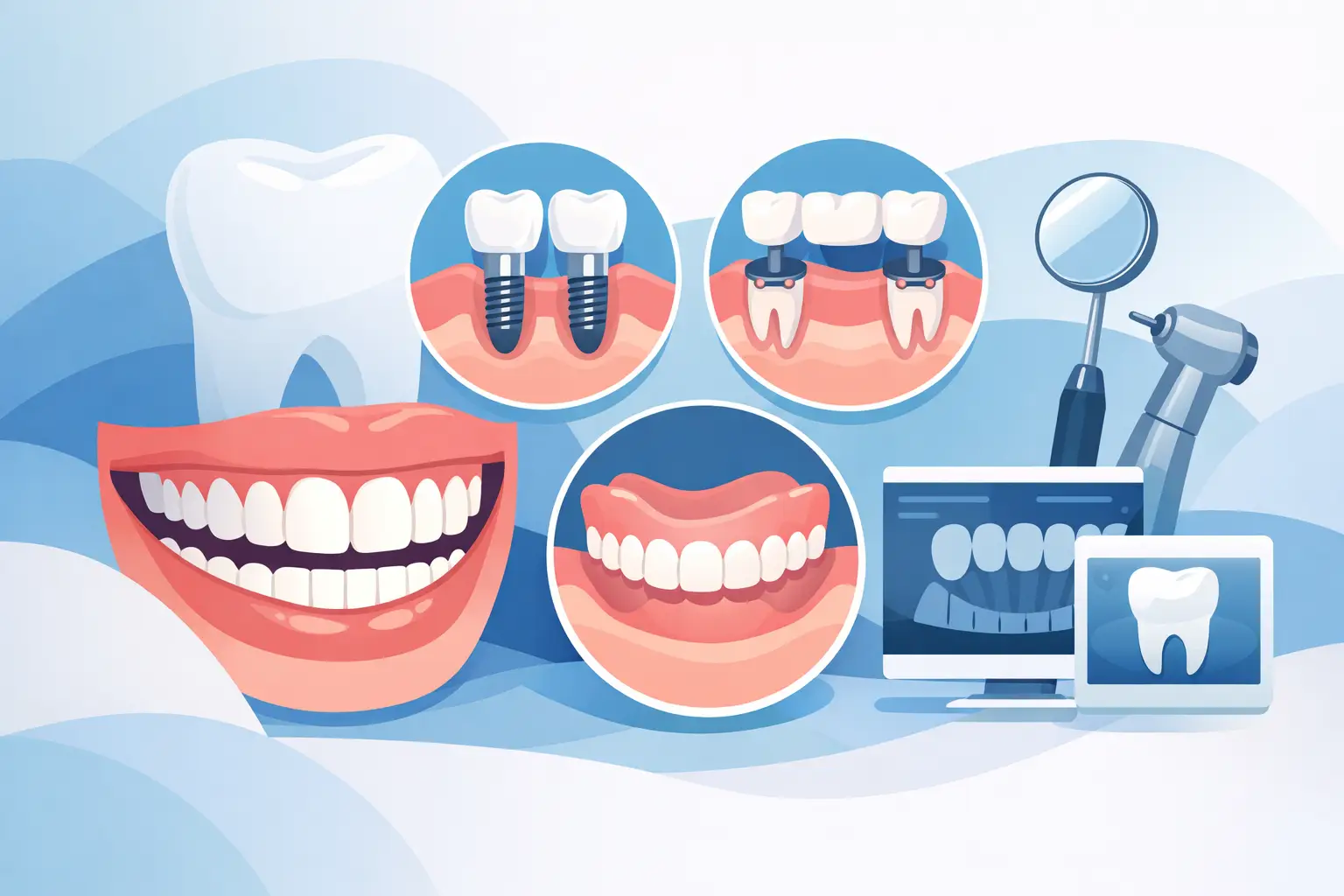
A bridge fills a gap by anchoring an artificial tooth to nearby teeth or implants. Traditional bridges can be a practical solution when the teeth next to the gap are strong enough to support them.
The advantage is that bridges can restore chewing and appearance without surgery in some cases. The trade-off is that a tooth-supported bridge may require reshaping healthy neighboring teeth. Implant-supported bridges can avoid that issue, but they add cost and healing time.
Dentures for broader tooth loss
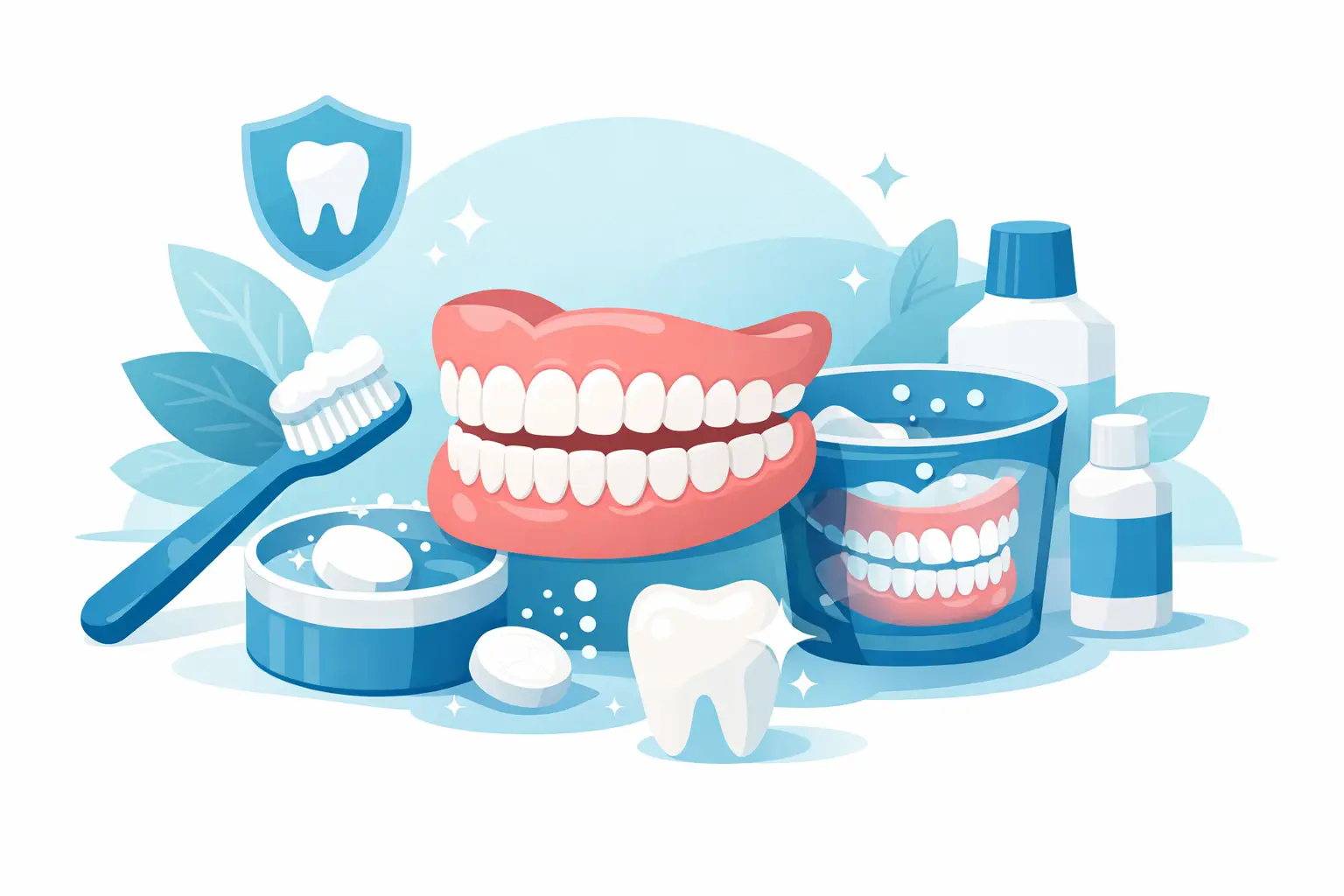
Dentures remain one of the most effective full mouth restoration options for patients missing many or all of their teeth. They can be full or partial, removable or supported by implants.
Traditional removable dentures are often more affordable upfront and can restore appearance quickly. However, they may shift, reduce bite strength, and require adjustments as the gums and bone change. Implant-supported dentures usually feel more secure and functional, but they require adequate bone and a larger investment.
Dental implants for long-term replacement
Implants replace missing tooth roots and support crowns, bridges, or dentures. They are often recommended when long-term stability, bone support, and chewing power are top priorities.
For many patients, implants feel closest to natural teeth. They can help prevent bone loss and do not rely on neighboring teeth for support. Still, implants are not automatic for everyone. Healing time, medical history, smoking, bone density, and budget all matter. Some patients also need bone grafting before implant placement.
Periodontal treatment when gums need attention first
If gum disease is present, restoring teeth without treating the gums first usually leads to poor results. Deep cleanings, ongoing periodontal care, or other gum-focused treatment may be the first phase of a full-mouth plan.
This part is not always the one patients ask about, but it is often the one that determines success. Healthy teeth need healthy support. If gums bleed easily, teeth feel loose, or bone loss shows up on X-rays, the gums cannot be treated like a side issue.
Root canal therapy to save infected teeth
When the nerve inside a tooth becomes infected or inflamed, root canal treatment may allow that tooth to stay in place rather than be removed. In a full-mouth restoration, saving the right natural teeth can reduce the need for more extensive replacement.
The key phrase there is the right teeth. Sometimes saving a tooth is wise. Sometimes extraction followed by replacement creates a more predictable long-term outcome. A careful exam helps make that call.
How dentists decide which option fits
It starts with the bite, not just the smile
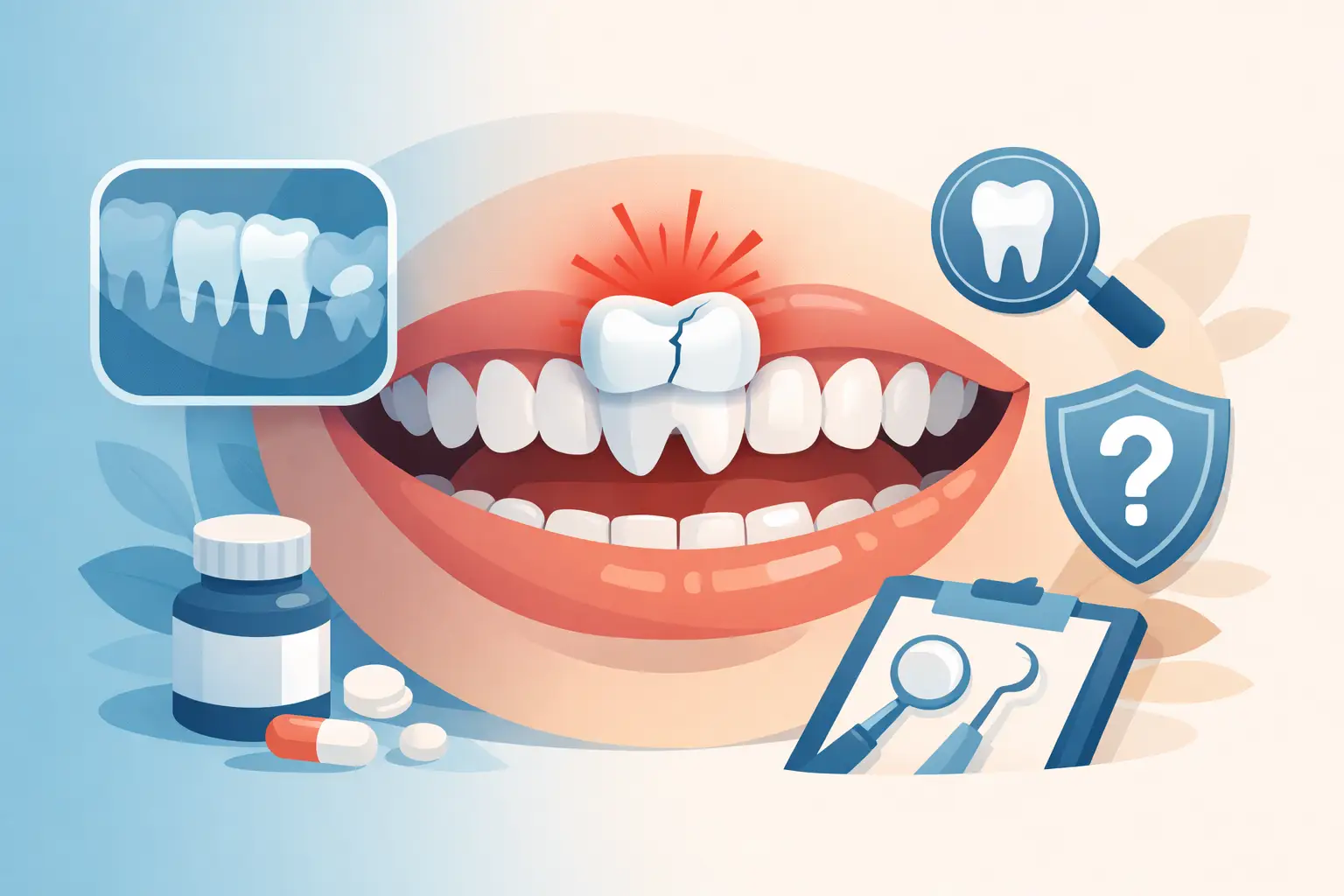
A tooth may look fixable on its own, but if the bite is off, that repair may fail early. Dentists planning a full-mouth case pay close attention to how the upper and lower teeth meet, where pressure is uneven, and whether grinding or clenching is contributing to the damage.
This matters because repeated stress can crack crowns, loosen teeth, wear restorations, and create jaw discomfort. Sometimes a patient comes in asking about cosmetic improvements, but the real issue is a bite that has been breaking things down for years.
Existing teeth, bone, and gums shape the plan
If several teeth can be saved with crowns and periodontal care, a conservative plan may be best. If bone loss is advanced and many teeth have poor long-term prognosis, removing some failing teeth and replacing them strategically may create a stronger result.
There is also the question of timing. Some patients want to phase treatment over months or years. Others need to move quickly because of pain, infection, upcoming events, or the inability to chew properly. A good treatment plan meets both clinical needs and real-life needs.
Full mouth restoration options and cost
Cost is one of the biggest concerns, and understandably so. Full-mouth treatment can range from moderate to significant depending on how complex the case is, how many teeth are involved, and whether treatment includes implants, grafting, or multiple custom restorations.
The lowest upfront price is not always the lowest long-term cost. A removable denture may be more affordable now, while implants may offer better stability and fewer compromises later. At the same time, not every patient needs the most extensive solution. Sometimes preserving healthy teeth and rebuilding in stages is the smartest financial and clinical choice.
Clear conversations matter here. Patients deserve to understand what is urgent, what can wait, what each option will cost, and what kind of maintenance each choice requires over time.
Comfort matters more than people expect
Many people who need major dental work have been putting it off for years, often because of fear, embarrassment, or one bad experience in the past. That emotional side is real, and it should be part of treatment planning.
A supportive dental team can make a major difference by explaining each step, spacing treatment in manageable phases, and offering comfort-focused care when appropriate. In a practice like Amor Dental Arts, where comprehensive services are available under one roof, that can also mean fewer referrals, fewer moving parts, and a smoother experience for busy families and anxious patients.
Questions to ask before choosing a treatment plan
Before moving forward, ask whether the goal is to save teeth, replace teeth, or do both. Ask how long the results are expected to last, what future maintenance is likely, and what happens if treatment is delayed.
You should also ask whether there are phased options. In many cases, there is more than one clinically acceptable plan. One may be ideal, another may be more affordable, and a third may balance function and cost in a practical way. Good dentistry is not about pressure. It is about clarity.
The best plan is the one you can maintain
The strongest full-mouth result is not necessarily the most complex one. It is the one that restores health and function in a way you can realistically care for over time. That may mean implants. It may mean crowns, bridges, gum treatment, and a night guard. It may mean a staged plan that starts with getting you out of pain and builds from there.
If your mouth has reached the point where everything feels connected – chewing problems, damaged teeth, missing teeth, gum issues, or declining confidence – you do not need to solve it all alone before asking for help. The right starting point is simply a thorough exam, a clear explanation, and a team willing to meet you where you are.