A denture that felt comfortable when you left the dental office can become irritating surprisingly quickly when plaque, food debris, or a small crack gets in the way. Knowing how to care for dentures protects your appliance, supports the health of your gums, and helps you feel more confident speaking, eating, and smiling.
Dentures are durable, but they are not indestructible. They need a daily routine that is gentler than the routine you use for natural teeth, along with regular professional checkups. A few careful habits can prevent many common problems, from unpleasant odor and staining to sore spots and broken teeth.
How to Care for Dentures Every Day
The most effective denture care happens in small, consistent steps. Clean your dentures after meals when possible, brush them thoroughly at least once each day, and follow your dentist’s instructions for overnight storage.
Start by rinsing your dentures under cool or lukewarm running water to remove loose food particles. Avoid hot water. Heat can cause some denture materials to warp, which may change the fit and create pressure on your gums.
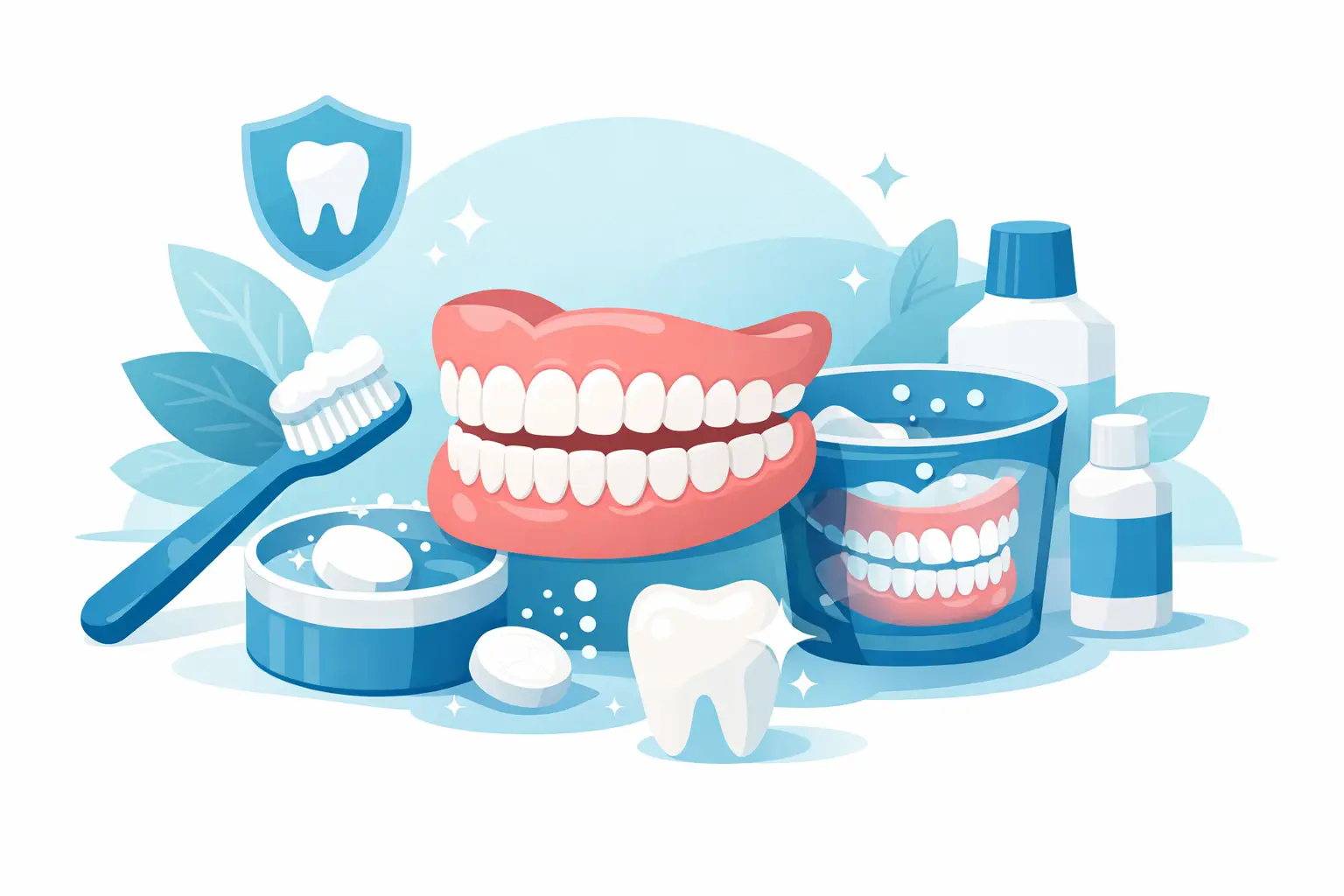
When you brush, use a soft denture brush or a soft-bristled toothbrush reserved only for your dentures. Clean every surface, including the teeth, the pink base, and the areas that rest against your gums. A non-abrasive denture cleanser is usually the best choice. Regular toothpaste can be too abrasive for denture acrylic and may leave tiny scratches where stains and bacteria can collect.
Handle dentures over a folded towel or a sink partly filled with water. If they slip from your hands, the soft landing may keep them from cracking. Even a small chip can affect the way your dentures fit and function.
Soak Them as Directed
Many full and partial dentures should be removed at night to give the gum tissues a chance to rest. Keeping dentures in while sleeping can increase irritation and allow bacteria or yeast to build up beneath the appliance. It can also make it harder for your dentist to identify early signs of tissue changes.
Place your dentures in a denture-soaking solution or plain water, depending on the type of denture and your dentist’s instructions. Do not let them dry out unless you have been specifically told otherwise. Drying can cause certain materials to lose their shape.
If your denture has metal clasps or attachments, ask your dental team which soaking product is right for it. Some cleansers are not appropriate for every type of partial denture. Always rinse dentures well before putting them back in your mouth, especially after using a cleaning tablet or solution.
Clean Your Mouth, Not Just Your Dentures
Dentures replace teeth, but they do not replace the need for oral hygiene. Your gums, tongue, cheeks, palate, and any remaining natural teeth still need daily care.
After removing your dentures, gently brush your gums, tongue, and the roof of your mouth with a soft toothbrush. This removes plaque, stimulates circulation, and helps freshen your breath. If you have natural teeth, brush them twice daily with fluoride toothpaste and clean between them as your dentist recommends. For partial denture wearers, protecting the remaining teeth is especially important because those teeth help support the appliance.
A dry mouth can make dentures feel less secure and may increase your risk of irritation, decay in remaining teeth, and fungal infections. Sip water throughout the day, particularly if you take medications that reduce saliva flow. Your dental team can also recommend products or strategies that may help if dry mouth is persistent.
Be Gentle With Adhesives and Repairs
Denture adhesive can help some patients feel more secure, especially while adjusting to new dentures. It should be used sparingly and only as directed. A well-fitting denture should not require large amounts of adhesive to stay in place.
If you find yourself using more adhesive than before, or if the denture shifts while eating or talking, schedule an appointment. Your gums and jawbone naturally change over time, so a denture that once fit well may eventually need an adjustment, reline, or replacement. More adhesive is not a long-term fix for a loose denture.
Never try to repair a broken denture with household glue, super glue, or a do-it-yourself repair kit. These products can contain unsafe chemicals, alter the fit, and make a professional repair more difficult. Bring the denture to your dental office instead. In many cases, prompt care can restore comfort and function without unnecessary delay.
Prevent Stains, Odor, and Damage
Coffee, tea, red wine, tobacco, and strongly colored foods can stain denture teeth over time. You do not need to avoid every favorite food or drink, but rinsing your dentures after consuming them can help limit discoloration. Daily brushing is more effective than occasional deep cleaning after stains have already built up.
Avoid using bleach, whitening toothpaste, stiff brushes, or powdered household cleaners. These can weaken denture materials, change the color of the pink base, or roughen the surface. Whitening products designed for natural teeth will not whiten denture teeth, either. If your dentures look dull or stained despite careful cleaning, a professional cleaning is safer than experimenting with harsh products at home.
Be mindful of what you eat, particularly with new dentures. Sticky foods can pull a denture loose, while hard foods such as nuts, ice, and hard candy can crack artificial teeth or the denture base. Cut firm foods into smaller pieces and chew slowly on both sides of your mouth when possible. With practice, most people return to a varied, enjoyable diet, although some foods may require a little extra care.
Watch for Changes in Fit or Comfort
A denture should not cause ongoing pain. Some mild tenderness is common during the adjustment period after receiving a new appliance, but sores, pressure points, or persistent rubbing deserve attention. Do not try to file, bend, or reshape your dentures yourself.
Call your dentist if you notice pain, bleeding gums, mouth sores that do not improve, clicking while speaking, difficulty chewing, a denture that suddenly feels loose, or cracks and chips. Redness beneath a denture, a burning sensation, or white patches may signal an infection that needs professional treatment.
Regular dental visits remain part of denture care, even if you no longer have natural teeth. During an exam, your dentist can evaluate the fit of your dentures, check your gums and oral tissues, screen for oral cancer, and look for signs that your jawbone or bite has changed. Professional care also helps identify small issues before they become an uncomfortable emergency.
Full Dentures, Partial Dentures, and Implant-Supported Options
Your care routine may vary slightly based on the type of tooth replacement you wear. Full removable dentures need careful brushing, soaking, and regular fit checks. Partial dentures require the same attention, along with thorough cleaning around your remaining natural teeth and clasps.
Implant-supported dentures can provide greater stability, but they still need daily cleaning. The denture itself, the gums around the implants, and any attachment components must be kept free of plaque. Some implant-supported restorations are removable, while others are fixed in place and require specialized brushes, flossing tools, or water-flossing techniques. Your dentist will show you the routine that matches your specific restoration.
There is no one-size-fits-all schedule for relines or replacements. It depends on the condition of the denture, changes in your mouth, and how consistently it has been cared for. A professional evaluation is the clearest way to know what your smile needs.
If your dentures no longer feel like a natural part of your day, you do not have to simply put up with the discomfort. At Amor Dental Arts, compassionate dental care includes listening closely, evaluating the cause, and helping you find a comfortable path forward. A well-cared-for denture should support your life, not limit it.