A crown is meant to make a damaged tooth feel strong and comfortable again, so pain around one can be unsettling. If you are asking, “why does my crown hurt,” the answer may be as simple as temporary sensitivity after recent treatment – or it may signal a problem beneath, around, or opposite the crown that deserves prompt attention.
The good news is that crown pain is usually treatable. A dental exam and X-rays can help identify the source before a minor issue becomes a cracked tooth, infection, or a restoration that needs more extensive repair.
Why Does My Crown Hurt? Common Causes
A dental crown covers the visible portion of a tooth, but it does not make the tooth or surrounding gum tissue immune to future problems. The location, timing, and type of discomfort all help narrow down the likely cause.
Your new crown may need time to settle
It is common for a newly placed crown to feel somewhat sensitive for a few days, particularly after the tooth was prepared or after deep decay was removed. You may notice a brief zing with cold drinks, warmth, or pressure. The tooth’s nerve can be irritated by the dental work and may need time to calm down.
This sensitivity should gradually improve, not intensify. Use a soft toothbrush, avoid very hot or icy foods for a short period, and chew on the other side if the tooth is tender. If discomfort persists longer than a week or two, wakes you at night, or becomes more severe, contact your dentist.
The bite may be slightly too high
Even a carefully made crown can sit a fraction of a millimeter too high when you bite down. Your teeth and jaw are very sensitive to small changes. If the crown hits first, it can create soreness in the crowned tooth, the surrounding ligament, the jaw muscles, or the opposite tooth.
A high bite often feels like pressure or a bruise when chewing, rather than a sharp temperature sensitivity. It is usually a straightforward fix: your dentist checks the bite and carefully adjusts the crown’s surface. Do not try to wear the crown down yourself or wait months hoping the feeling will disappear.
Decay can form at the crown’s edge
A crown cannot decay, but the natural tooth under and around it can. Bacteria may collect where the crown meets the tooth, especially if flossing is difficult, the crown margin is worn, or the cement seal has weakened over time. Early decay may not hurt at all. As it progresses, it can cause sensitivity, pain with sweets, or tenderness when biting.
This is one reason regular cleanings and exams still matter after a crown is placed. Your dentist can evaluate the crown margins and spot changes that are not visible in a bathroom mirror.
The tooth nerve may be inflamed or infected
Some crowned teeth have had root canal treatment, while others still have a living nerve. If the nerve was already stressed by deep decay, a large old filling, trauma, or repeated dental work, it can become inflamed after crown placement. In other cases, bacteria reach the inner tooth through a crack or decay at the crown’s edge.
Pain from nerve inflammation may be spontaneous, throbbing, or linger long after a hot or cold drink is gone. An infection can cause swelling, a bump on the gum, a bad taste, or pain when biting. Root canal treatment may be recommended to save the tooth, and the existing crown can sometimes remain in place depending on its condition and how the tooth is accessed.
A crack, loose crown, or broken tooth may be involved
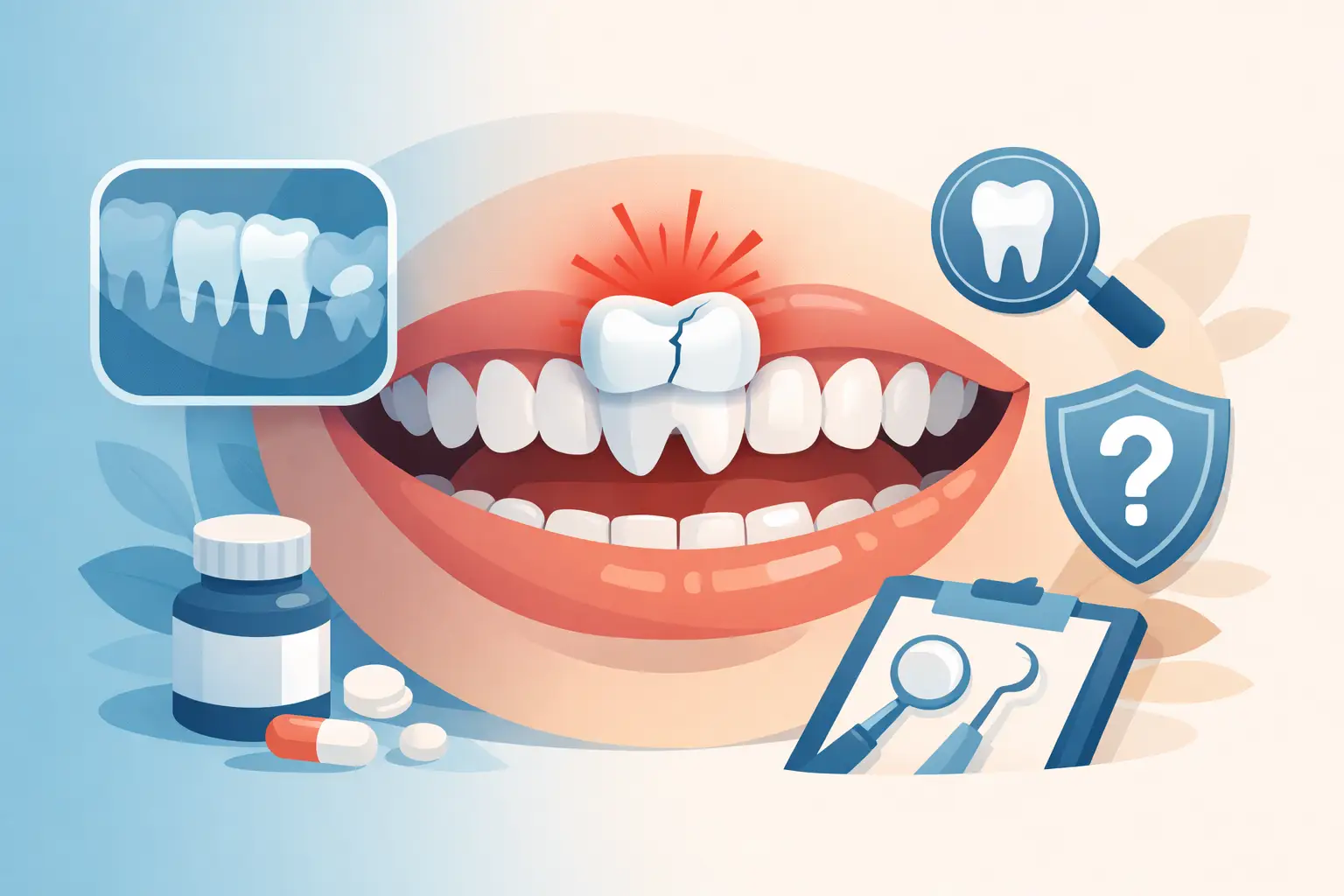
Crowns protect teeth, but they can still crack, chip, or loosen. The tooth beneath a crown can also develop a fracture, especially if it had a large filling, underwent root canal treatment, or is exposed to heavy biting forces. Pain that occurs only when you release your bite is often associated with a crack, though an examination is needed to confirm it.
Grinding or clenching can contribute to this problem. Many people clench during sleep without realizing it. If wear patterns or jaw soreness suggest grinding, a custom night guard may help protect your crown and your other teeth.
Your gums or a nearby tooth may be the true source
Pain near a crown is not always coming from the crowned tooth. Inflamed gums can feel sore or bleed around the crown. Food caught between teeth can cause localized tenderness. A cavity, cracked tooth, or gum infection in a neighboring tooth can also make the entire area feel painful.
Sinus pressure can occasionally cause aching in upper back teeth, particularly when several teeth feel tender at the same time. Your dentist will look at the whole area rather than assuming the crown is automatically the problem.
When Crown Pain Needs Urgent Care
A mild, improving sensitivity after a recent crown may be monitored briefly. But some symptoms should not wait for your next routine visit. Call a dental office promptly if you have:
- Facial or gum swelling, fever, or trouble swallowing
- Severe throbbing pain that does not improve with over-the-counter pain medicine
- A crown that is loose, broken, or has come off
- Pain when biting that is worsening or prevents you from eating
- A pimple-like bump on the gum, drainage, or a persistent bad taste
Facial swelling, difficulty breathing, or difficulty swallowing can indicate a spreading infection and requires emergency medical attention. For other urgent dental concerns, same-day care may help relieve pain and protect the tooth before the problem advances.
What to Do Until You See the Dentist
Keep the area clean, but be gentle. Brush with a soft-bristled toothbrush and floss carefully around the crown. If the gum is irritated, a warm saltwater rinse can be soothing. Choose softer foods and avoid chewing ice, hard candy, popcorn kernels, or sticky foods on that side.
Over-the-counter pain relievers may help when taken as directed on the label and when safe for your health history. Do not place aspirin directly on the gum or tooth. It can burn the tissue and will not treat the source of the pain.
If a crown comes off, save it in a clean container and bring it to your appointment. Avoid using household glue or attempting a permanent repair at home. In some situations, a pharmacy temporary dental cement may protect the tooth for a short time, but it is still essential to schedule professional care as soon as possible.
How a Dentist Finds the Cause of Crown Pain
Crown pain is not something that can be diagnosed accurately from symptoms alone. During your visit, the dentist may examine the crown’s fit and edges, check your bite, assess the gums, test the tooth’s response, and take X-rays to look beneath the crown and around the root.
Treatment depends on what is found. A bite adjustment may resolve pressure quickly. Gum inflammation may improve with professional cleaning and better access for home care. A loose crown may be recemented if it and the tooth are sound. Decay, a fracture, or an infection may call for a new crown, root canal treatment, or another restorative approach.
The right option depends on how much healthy tooth structure remains, the condition of the crown, and your long-term goals. A trustworthy dental team should explain what they see, why treatment is recommended, and what alternatives may be appropriate for your situation.
Protecting Your Crown for the Long Term
With good care, many crowns last for years, but they are not lifetime restorations. Brush twice daily with fluoride toothpaste, clean between your teeth every day, and keep regular dental appointments. If you clench or grind, ask whether a night guard would be a worthwhile investment. Avoid using teeth to open packages or bite nonfood objects, since that pressure can damage both natural teeth and crowns.
At Amor Dental Arts, patients can receive a careful evaluation of crown discomfort along with the restorative, root canal, periodontal, and emergency care that may be needed in one familiar setting. You do not have to guess whether the sensation is normal or put up with pain while hoping it fades. A timely exam can provide clarity, comfort, and the best chance of preserving the tooth beneath your crown.