A full mouth restoration example is rarely about changing every tooth simply for appearance. More often, it begins when someone is tired of working around dental problems: chewing on one side, avoiding certain foods, hiding a smile, or worrying that another tooth may break. Full mouth restoration brings the entire mouth into the treatment plan so comfort, function, health, and appearance can be addressed together.
For many patients, this is a meaningful decision. The goal is not to rush into the biggest treatment possible. It is to understand what is happening, explain the available options clearly, and build a plan that fits the patient’s health needs, timeline, and budget.
What Full Mouth Restoration Can Include
Full mouth restoration, sometimes called full mouth rehabilitation, describes a customized combination of restorative, surgical, periodontal, and cosmetic care. It may involve rebuilding or replacing several teeth, restoring a stable bite, treating gum disease, or improving worn and damaged teeth.
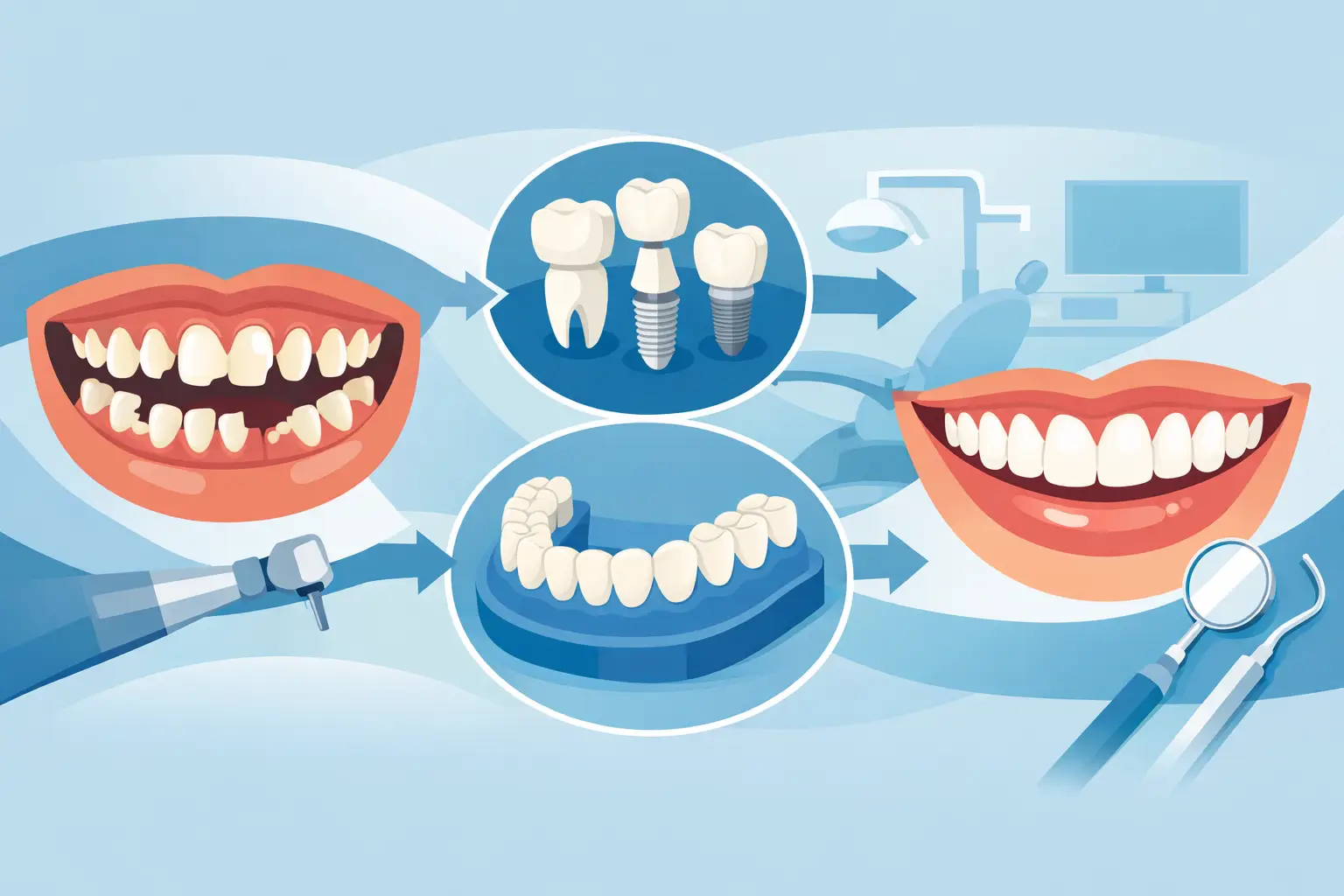
The exact treatment varies widely. One person may need a few crowns and an implant. Another may need dentures, extractions, bone grafting, and implant-supported replacement teeth. Patients with severe grinding may need bite adjustments and protective night guards along with restorative work. A healthy-looking smile is a welcome result, but the foundation must be comfortable and functional first.
A comprehensive exam is the starting point. Your dentist evaluates teeth, gums, bite alignment, jaw comfort, existing restorations, bone support, and signs of infection or decay. Digital X-rays, photographs, and scans can help create a more complete picture before any treatment begins.
A Full Mouth Restoration Example: Rebuilding Function First
Consider a representative patient, Maria, a working parent in her early 50s. She had avoided regular dental visits for several years because of anxiety and a busy schedule. By the time she came in, she was missing two back teeth, had older crowns that were failing, and had several teeth worn down from nighttime grinding. She also had tender gums that bled when she brushed.
Maria’s main concern was not getting a “perfect” smile. She wanted to eat comfortably, speak without feeling self-conscious, and stop worrying about a painful dental emergency. That distinction guided the conversation. Her treatment was planned in stages so the urgent health concerns could be handled first, while her final restorations were designed for a more stable, natural-looking smile.
Stage One: Stabilizing the Mouth
The first priority was addressing active disease and preventing further damage. Maria received a periodontal evaluation and treatment for gum inflammation. One tooth had an infection that could not be predictably saved, so extraction was recommended. A separate cracked tooth was restored with a crown to protect it from breaking further.
At this stage, temporary solutions may be appropriate. Temporaries can protect prepared teeth, maintain spacing, and allow the dentist to assess comfort and bite before final restorations are placed. For anxious patients, a caring team, clear explanations, and sedation options when appropriate can make these visits much more manageable.
Not every patient needs the same sequence. If pain, swelling, or infection is present, emergency treatment comes first. If gum disease is advanced, periodontal health needs attention before crowns, veneers, or implants are considered. Restoring teeth without treating the underlying cause can lead to disappointing results and avoidable future costs.
Stage Two: Replacing Missing Teeth
After healing, Maria chose dental implants to replace her missing back teeth. Implants can help restore chewing strength and prevent neighboring teeth from shifting into open spaces. Depending on bone volume and the location of the missing tooth, an implant may require bone grafting before placement or a healing period before the final crown is attached.
Implants are an excellent option for many people, but they are not the only option. A fixed bridge or removable partial denture may be better suited to some patients based on oral health, medical history, timeline, and financial preferences. A trustworthy treatment conversation includes the benefits and limits of each approach, not a one-size-fits-all recommendation.
Stage Three: Rebuilding Worn and Damaged Teeth
With her gums healthier and missing teeth addressed, Maria’s dentist planned restorations for the teeth that had been weakened by decay, fractures, and grinding. Crowns were used where full coverage was needed. More conservative restorations were considered for teeth that still had sufficient healthy structure.
Because her bite had changed over time, the final crowns needed to work together, not just look good individually. Bite planning is a key part of comprehensive restoration. Teeth that meet incorrectly can create discomfort, chip restorations, strain the jaw, and contribute to continued wear.
Maria also received a custom night guard after her restorations were complete. A night guard does not eliminate stress or guarantee that grinding will stop, but it can help protect natural teeth and dental work from excessive nighttime forces.
Why Treatment Is Often Completed in Phases
A full mouth restoration does not always happen in one appointment, or even one month. Healing time, laboratory work, implant integration, and careful bite adjustments all affect the schedule. Phased treatment also gives patients time to make informed decisions and spread care over a more manageable timeline.
For some patients, a practical plan may begin with the teeth that hurt or carry the highest risk of failure. Other improvements can follow later. For others, completing treatment efficiently is essential because they are preparing for a major event, starting a new job, or dealing with repeated dental emergencies. The right pace depends on clinical needs and personal circumstances.
Cost is another honest consideration. Full mouth restoration can involve significant investment, especially when implants or extensive crown work are needed. A detailed treatment plan should explain what is recommended, why it is recommended, which steps are urgent, and what alternatives may be available. Patients should feel comfortable asking about phased care, financing, and the expected lifespan and maintenance of each option.
What Results Can Patients Expect?
When restoration is carefully planned and maintained, patients often report that daily life feels easier. They may chew a wider range of foods, smile more freely in photos, and spend less energy worrying about pain or loose dental work. Restored teeth can also support clearer speech and a more balanced bite.
Still, dental restorations are not maintenance-free. Crowns, bridges, implants, dentures, and veneers need consistent brushing, flossing or interdental cleaning, professional checkups, and attention to changes in fit or comfort. Gum health remains especially important around implants and restorations. A restored smile is a long-term partnership between the patient and dental team.
At Amor Dental Arts, comprehensive care can be coordinated under one roof, helping patients move from urgent concerns to a healthier, more confident smile with a plan that feels clear and personal.
When to Schedule a Consultation
A consultation may be helpful if you have multiple missing, broken, worn, or heavily restored teeth; ongoing jaw discomfort; trouble chewing; recurring infections; or dentures that no longer fit well. You do not need to know which procedures you need before coming in. That is what a complete evaluation is for.
The most helpful next step is simply to talk openly about what has changed, what you are worried about, and what you hope to be able to do again. With thoughtful planning and compassionate care, rebuilding your smile can begin with one comfortable conversation.