A root canal often brings relief from the deep, persistent tooth pain that led you to seek care in the first place. Still, it is normal to feel cautious about the days afterward. This root canal recovery guide explains what is expected, what can make healing easier, and when a call to your dentist is the right next step.
Your treatment removes infected or inflamed tissue from inside the tooth, then cleans and seals the space to protect it. The surrounding tissues can remain tender for a short time, especially if the tooth was painful or infected before treatment. Recovery is usually manageable, and a few practical choices can make a meaningful difference.
What to Expect After a Root Canal
Most patients can return to their normal routine the same day or the following day. If you received sedation, however, plan to rest and have a responsible adult drive you home. Avoid driving, alcohol, important decisions, or operating machinery until the medication has fully worn off.
As the anesthesia fades, mild soreness or pressure around the treated tooth is common. You may notice it most when biting or chewing. This tenderness often improves over the first few days and can last a week or two, depending on the condition of the tooth before treatment and the amount of inflammation present.
Your tooth may have a temporary filling or temporary crown while your final restoration is being made. It can feel slightly different from your natural tooth at first, but it should not feel painfully high when you close your teeth together. If your bite feels uneven or the treated tooth hits first, contact your dental office. A small bite adjustment can prevent unnecessary pressure and help you stay comfortable.
Root Canal Recovery Guide: The First 24 Hours
Start by protecting the numb area. Do not chew until normal feeling has returned, since it is easy to bite your cheek, tongue, or lip without realizing it. Once the numbness is gone, choose soft foods that require minimal chewing, such as yogurt, scrambled eggs, oatmeal, soup that is not overly hot, applesauce, mashed potatoes, or smoothies eaten with a spoon.
Take any medication exactly as directed by your dentist. For many patients, over-the-counter pain relievers are enough to control post-treatment tenderness when used safely and according to the label or personal medical guidance. If an antibiotic was prescribed, complete the full course unless your dentist or physician tells you otherwise. Antibiotics are not necessary after every root canal, so only take them when they are specifically prescribed for you.
Try not to test the tooth repeatedly by biting down on it. That can keep the area irritated and make it harder to tell whether discomfort is naturally improving. Give the tooth a break, and chew on the opposite side when possible.
Eating and Drinking While You Heal
For the first several days, avoid hard, sticky, crunchy, and very chewy foods on the treated side. Ice, nuts, popcorn, hard candy, crusty bread, gum, caramel, and tough meat can place too much force on a tooth that has not yet received its final crown or filling.
Temperature sensitivity is less common after a root canal because the nerve tissue inside the tooth has been removed, but the surrounding gums and tissues may still be sensitive. If hot or cold foods feel uncomfortable, choose room-temperature foods and drinks for a day or two.
Hydration supports your overall recovery, particularly if you had swelling or were not eating comfortably before treatment. Water is a good choice. Limit sugary drinks, and avoid smoking or vaping, which can irritate oral tissues and interfere with healthy healing.
Keep Your Mouth Clean, Gently
A treated tooth still needs regular brushing and flossing. Brush twice daily with a soft-bristled toothbrush, using gentle pressure around the area if it feels tender. Continue flossing, but take care around a temporary restoration so you do not dislodge it. If you are unsure how to floss beside a temporary crown, ask your dental team for specific instructions.
You do not need harsh rinses to heal. Warm salt water can be soothing if your gums feel irritated: mix a small amount of salt into warm water, swish gently, and spit it out. Do not forcefully rinse, especially if you have also had an extraction or another surgical procedure.
Good home care matters because a root canal saves the tooth, but the outside of that tooth remains vulnerable to decay and gum disease. Keeping the area clean helps protect the treatment and your long-term oral health.
Why the Final Crown or Filling Matters
A root canal treats the infection inside a tooth. It does not automatically restore the tooth’s full strength. Molars and premolars, which handle substantial chewing pressure, often need a crown after root canal therapy. Front teeth may sometimes be restored with a filling, depending on how much healthy tooth structure remains.
Do not postpone your recommended final restoration. A tooth that has had a root canal can become more brittle over time, and a crack may make it much harder to save. The temporary restoration is designed to protect the tooth for a limited period, not to serve as a permanent solution.
At Amor Dental Arts, the goal is to make this next step clear and comfortable, so you know how to protect your tooth rather than wondering what comes next. Completing treatment promptly gives the tooth its best chance to function well for years.
When Discomfort Is Normal and When to Call
Mild soreness that gradually improves is generally part of normal healing. You should contact your dentist if pain becomes severe, worsens after a few days, or does not respond to the medication plan you were given. A prompt call is also appropriate if you have visible swelling inside or outside the mouth, a fever, a rash or other possible medication reaction, or difficulty swallowing or breathing.
Call if your temporary filling or crown comes loose, breaks, or falls out. Avoid chewing on that tooth until you receive guidance. You should also get in touch if your bite feels high, since this is usually simple to correct but can cause lingering pain if left alone.
A small amount of tenderness does not mean the root canal failed. Healing varies from person to person, especially when a significant infection was present. Your dental team can evaluate your symptoms, check the bite, and explain whether you need an adjustment, additional care, or simply more time to heal.
Supporting a Smooth Recovery at Home
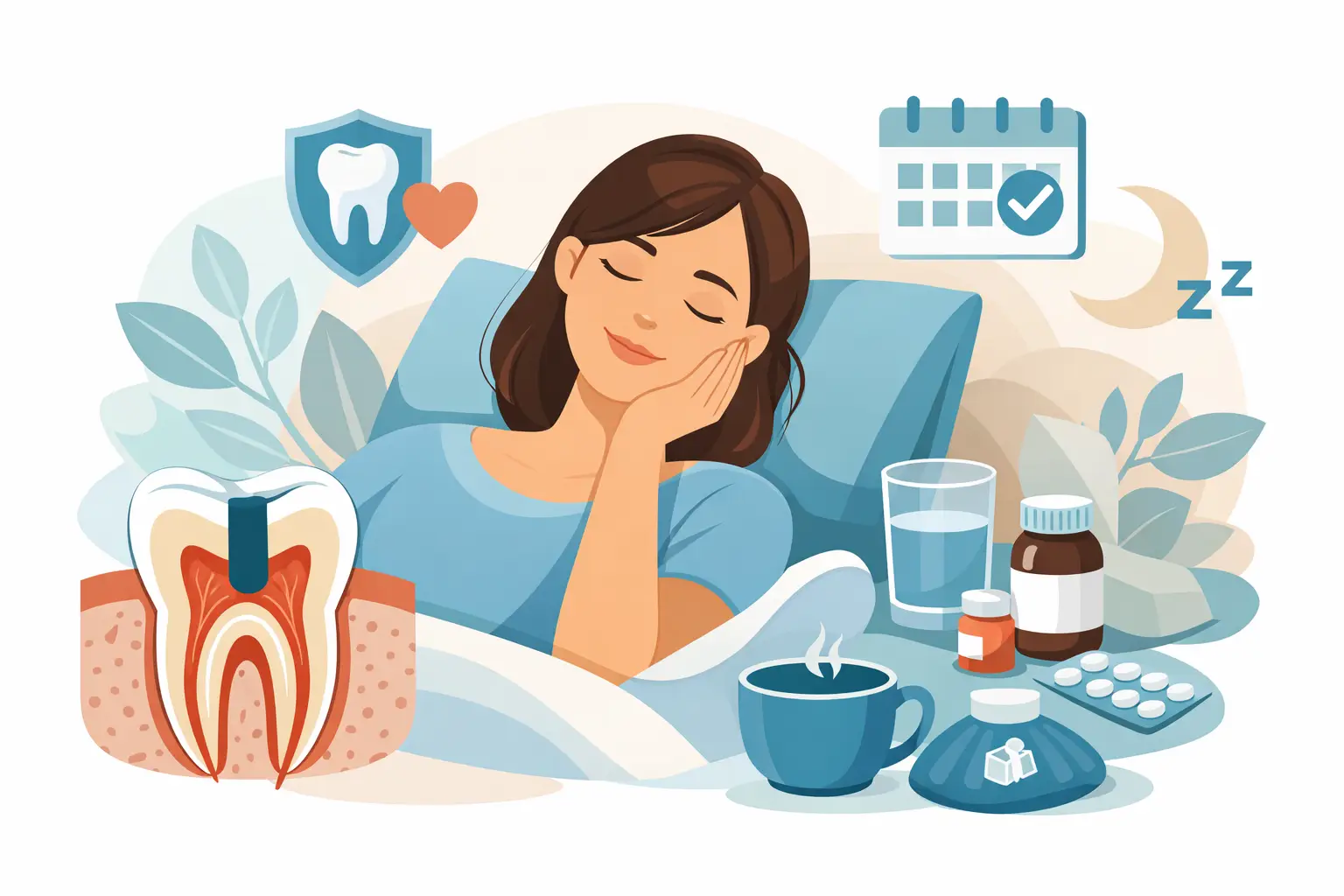
Rest is helpful, but you do not need to put your whole life on hold. Many working adults return to work after treatment, particularly when sedation was not used. Plan softer meals, keep your medication schedule simple, and avoid intense chewing on the treated side until your dentist confirms the tooth has its final restoration.
If you clench or grind your teeth, mention it at your follow-up visit. Clenching can put added pressure on a newly treated tooth and may contribute to soreness or damage over time. A night guard may be recommended in some cases, particularly if you wake with jaw tension or have worn teeth.
For parents, it can help to explain recovery in simple terms: the tooth has been cleaned on the inside and needs a few quiet days. Offer easy foods, remind your child not to chew hard snacks on that side, and keep their brushing routine consistent. If a child seems unusually uncomfortable or develops swelling, call the dental office rather than waiting.
A Calm Plan for the Days Ahead
The best recovery plan is not complicated: protect the tooth, keep it clean, take medications as instructed, and complete the final restoration. Most importantly, pay attention to the overall direction of your symptoms. Healing should move toward greater comfort, not increasing pain.
A root canal is often the step that lets you keep your natural tooth and move beyond the pain of infection. With thoughtful aftercare and a dental team that listens when something does not feel right, you can focus less on the procedure and more on getting back to comfortable meals, confident smiles, and everyday life.