A missing tooth can change more than a photograph. It can make a favorite meal harder to enjoy, affect the way you speak, or leave you quietly covering your smile. The good news is that missing tooth replacement options can be tailored to your health, goals, timeline, and budget. You do not have to choose a treatment based on a one-size-fits-all answer.
Replacing a tooth is often about protecting what remains. Teeth rely on one another for support, and the jawbone needs the stimulation created by chewing. A thoughtful treatment plan considers the open space, the condition of nearby teeth, your gums and bone, and what will feel manageable for you.
Why replacing a missing tooth can matter
Some people adjust well after losing a back tooth, especially if it is not visible when they smile. Still, an untreated gap can allow neighboring teeth to drift or tilt over time. This may change your bite, create areas that are harder to clean, and place uneven pressure on the remaining teeth.
When a tooth root is no longer in the jaw, the bone in that area may gradually shrink. Bone changes do not happen overnight, and not every open space causes the same problems. But for many patients, replacing a tooth earlier can preserve more options for the future.
The right timing depends on why the tooth was lost. After an extraction, for example, the site may need time to heal. In other cases, a dentist may recommend placing bone grafting material at the time of extraction to support the area for a future implant. If infection, gum disease, or trauma is involved, those concerns need to be addressed first.
Missing tooth replacement options to consider
There are several reliable ways to replace one or more teeth. Each option has meaningful advantages, and each comes with trade-offs worth discussing openly.
Dental implants
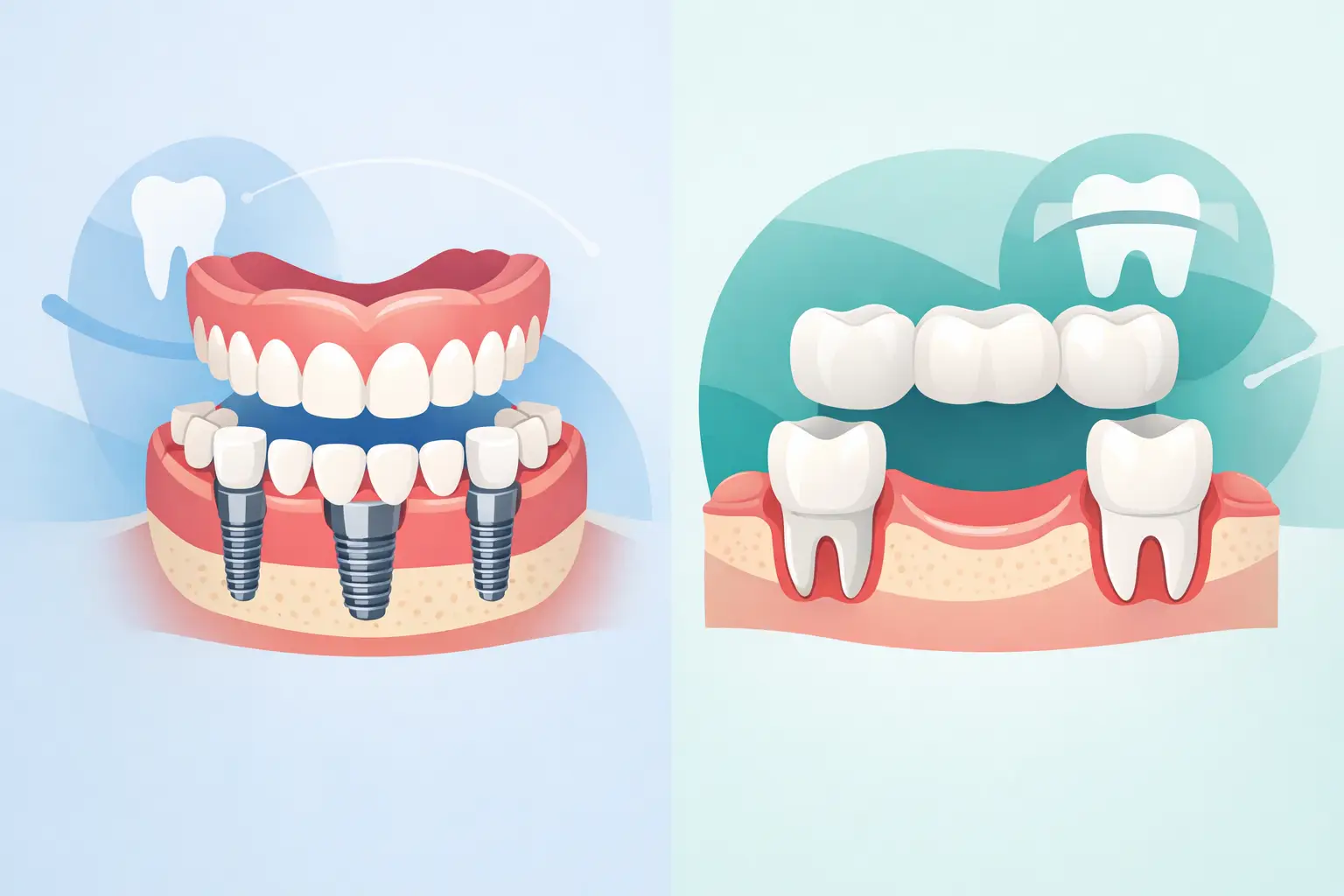
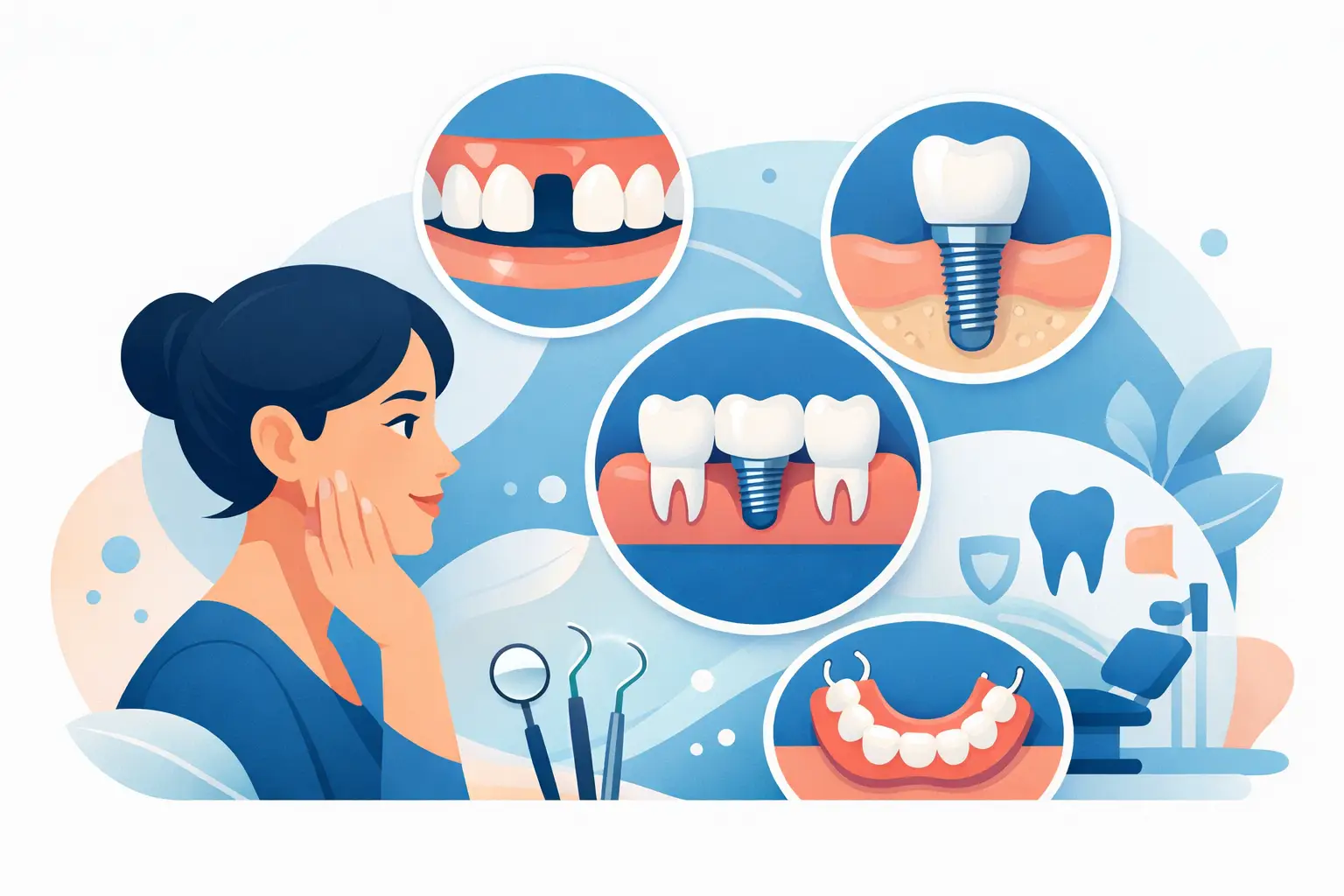
A dental implant replaces the root of a missing tooth with a small post placed in the jawbone. Once it has integrated with the bone, it can support a custom crown. For multiple missing teeth, implants may also support a bridge or help stabilize a denture.
Implants are often valued because they look and function much like natural teeth. They do not require the neighboring teeth to be reshaped, and they help provide stimulation to the jawbone. With consistent home care and professional checkups, they can be a long-term solution.
Implant treatment does take planning and patience. The total timeline can range from a few months to longer when healing, bone grafting, or treatment for gum disease is needed. Good candidates need healthy gums, sufficient bone or a plan to rebuild it, and a commitment to daily brushing and cleaning between teeth. Certain medical conditions, smoking, and uncontrolled gum disease can affect healing, but they do not automatically rule out treatment.
Fixed dental bridges
A traditional dental bridge fills a gap with a replacement tooth held in place by crowns on the teeth beside it. It is permanently cemented in place and cannot be removed at home. A bridge can restore chewing and appearance without the surgical placement involved with an implant.
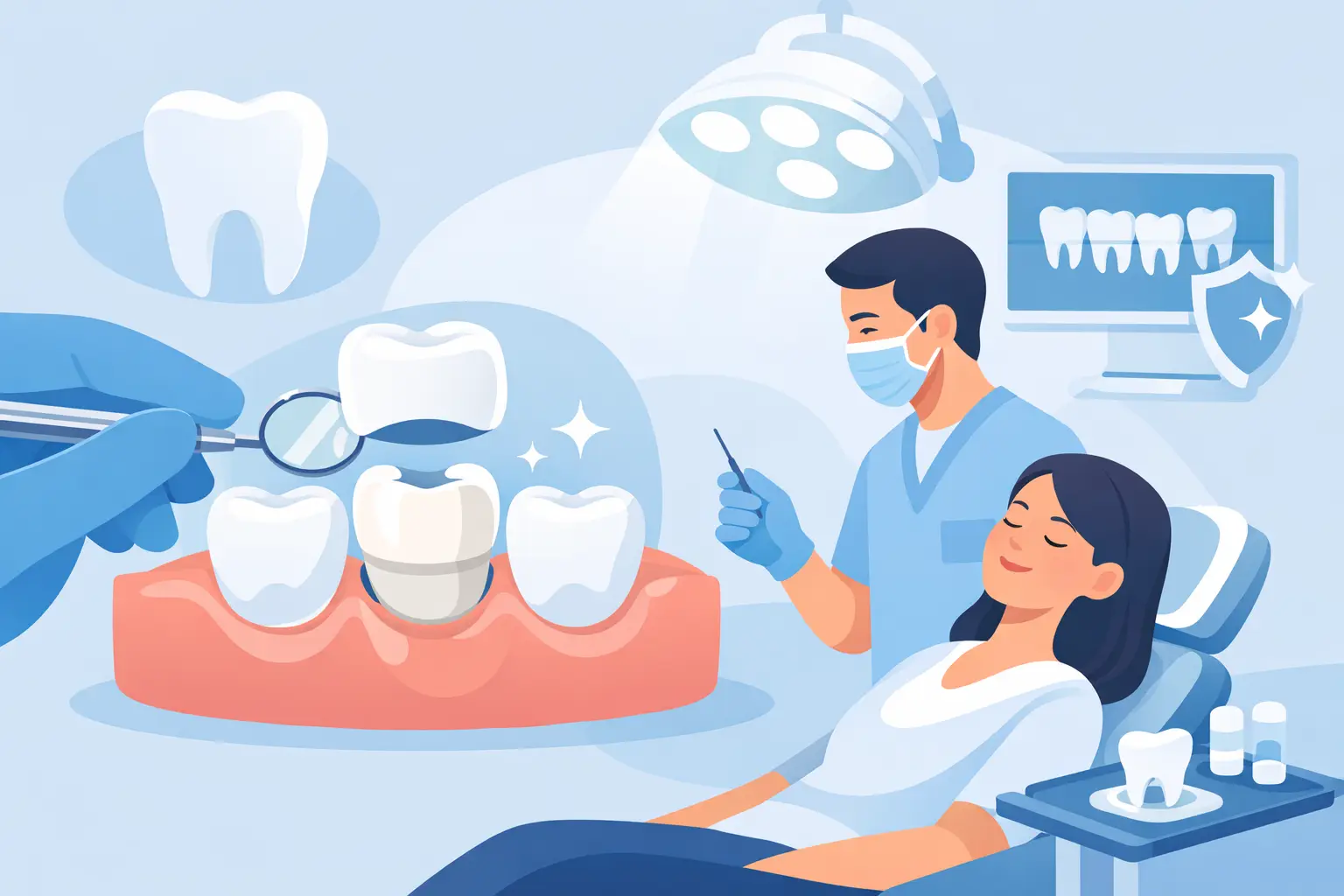
For a patient whose neighboring teeth already need crowns because of large fillings, cracks, or wear, a bridge may be a practical choice. Treatment is typically completed more quickly than an implant, and it can provide a natural-looking result.
The main consideration is that the supporting teeth must be prepared for crowns, even if they are otherwise healthy. A bridge also requires careful cleaning beneath the replacement tooth to protect the gums and supporting teeth. It may be an excellent solution, but it is best chosen after looking at the health of the entire area, not just the gap.
Removable partial dentures
A removable partial denture replaces one or several teeth with a custom appliance that clips or rests around existing teeth. Modern partials can be made with acrylic, flexible materials, or a lightweight metal framework, depending on the situation.
This option can be more affordable upfront than implants or a fixed bridge and is useful when several teeth are missing in different parts of the mouth. It can also be made relatively quickly, which matters when you need a functional solution soon.
A partial denture does need to be removed for cleaning and while sleeping unless your dentist gives different instructions. It may take time to get used to speaking and chewing with it, and it will need periodic adjustments as the mouth changes. For some patients, those trade-offs are well worth the flexibility and lower initial cost.
Complete dentures and implant-supported dentures
When all teeth in an upper or lower arch are missing, a complete denture can restore the appearance of a full smile and improve everyday function. Conventional dentures rest on the gums and can be removed for cleaning. They remain an important option for many patients, particularly when surgery is not desired or appropriate.
Because lower dentures can move during eating or speaking, implants can make a significant difference in stability. An implant-supported overdenture snaps onto strategically placed implants but can still be removed for cleaning. A fixed implant-supported full arch is another option for qualified patients who want teeth that remain in place.
The best choice depends on bone volume, medical history, expectations, and finances. A caring conversation about what you need to eat comfortably, how you want your smile to feel, and what maintenance you can manage is just as important as the technology itself.
Choosing the right option for your situation
The “best” replacement is not always the most expensive treatment, nor is it always the fastest. A dentist will begin with an exam and digital imaging to evaluate your bite, gums, bone levels, nearby teeth, and the cause of tooth loss. If a tooth was lost because of gum disease, treating the disease is a key part of protecting any new restoration.
Your priorities also matter. A busy working parent may value a treatment plan with fewer appointments. Someone with dental anxiety may want clear expectations, comfort options, and a slower pace. A patient replacing a front tooth may place more emphasis on cosmetic details, while someone missing a molar may focus on bite strength and durability.
Cost should be discussed clearly from the beginning. Insurance coverage varies widely by plan and by procedure. A bridge or partial denture may have a lower initial cost, while an implant can offer long-term advantages that make sense for some patients. Ask for a written treatment estimate, what follow-up care is anticipated, and whether financing options are available. Transparency helps you make a decision with confidence rather than pressure.
What treatment can feel like
Fear of discomfort keeps many people from asking about tooth replacement, especially if a previous dental experience was difficult. Modern dentistry offers local anesthetic, careful planning, and sedation options for appropriate patients. Whether you are receiving an implant, preparing teeth for a bridge, or being fitted for a denture, you should know what will happen before treatment begins.
Temporary solutions may be available while an implant heals or while a final bridge or denture is being made. These temporary restorations can help preserve your appearance and make day-to-day life easier. They are not designed to handle every food or function like a final restoration, so following instructions about chewing and cleaning is essential.
At Amor Dental Arts, treatment planning is designed to be both clinically thorough and personal. Patients can discuss their concerns, ask direct questions, and receive care under one roof when their plan includes restorative, surgical, or periodontal needs.
Caring for your replacement tooth
A replacement tooth still needs daily care. Brush twice daily with fluoride toothpaste, clean between teeth or around implants as instructed, and keep regular professional visits. A bridge may require a floss threader or water flosser to clean under the artificial tooth. Implant crowns need careful cleaning at the gumline, while dentures should be removed and cleaned with products made for denture materials.
Do not ignore soreness, looseness, clicking, bleeding gums, or changes in your bite. Small concerns are often easier to manage early. A replacement is an investment in your comfort and health, and routine maintenance helps protect it.
If you have been putting off a conversation about a missing tooth, start with an exam rather than trying to decide alone. A clear, compassionate evaluation can show you which option fits your mouth and give you a practical path back to eating, speaking, and smiling with greater ease.