
A cracked tooth at dinner, a child waking up with facial swelling, a sudden toothache before work – dental emergencies rarely happen at a convenient time. Knowing how to handle dental emergencies can make the difference between saving a tooth, preventing infection, and avoiding more complex treatment later.
The first priority is to stay calm and call a dentist as soon as possible. Many urgent dental problems are treatable the same day, but what you do in the first few minutes matters. Some situations can wait a short time for an appointment. Others need immediate care. If you have trouble breathing, uncontrolled bleeding, major facial trauma, or swelling that seems to be spreading rapidly, seek emergency medical attention right away.
How to Handle Dental Emergencies at Home First
Home care is never a substitute for professional treatment, but it can protect your mouth until you are seen. Start by gently rinsing with warm water so you can see the area more clearly. If there is bleeding, apply light pressure with clean gauze or a soft cloth. A cold compress on the outside of the cheek can help reduce swelling and ease discomfort.
Over-the-counter pain relievers may help, but take them only as directed and avoid placing aspirin directly on the gums or tooth. That old advice can irritate soft tissue and make the area feel worse. Try to keep the injured area clean and avoid chewing on that side of your mouth.
The next step depends on the type of emergency. Not every dental problem is handled the same way, and timing can affect the outcome.
If a Tooth Gets Knocked Out
A knocked-out permanent tooth is one of the most time-sensitive dental emergencies. Pick the tooth up by the crown, which is the part you normally see in the mouth. Do not touch the root. If it is dirty, rinse it very gently with water for a few seconds. Do not scrub it, dry it off, or wrap it in tissue.
If possible, place the tooth back into the socket and bite down gently on clean gauze to hold it in place. If that is not possible, keep it moist in milk or in a tooth preservation solution if you have one. In many cases, getting to a dentist quickly offers the best chance of saving the tooth.
For baby teeth, do not try to reinsert them. Call a dentist for guidance instead.
If You Have a Severe Toothache
A strong toothache can signal decay, infection, a cracked tooth, gum inflammation, or even an abscess. Rinse with warm salt water and gently floss to remove any food trapped between the teeth. Sometimes pressure from stuck debris can mimic a serious tooth problem.
If pain is sharp, throbbing, or constant, especially with swelling or sensitivity to pressure, do not wait too long to be seen. Tooth pain rarely resolves on its own if the cause is infection or structural damage. Delaying care can turn a manageable problem into a root canal, an extraction, or a spreading infection.
If a Tooth Is Cracked, Chipped, or Broken
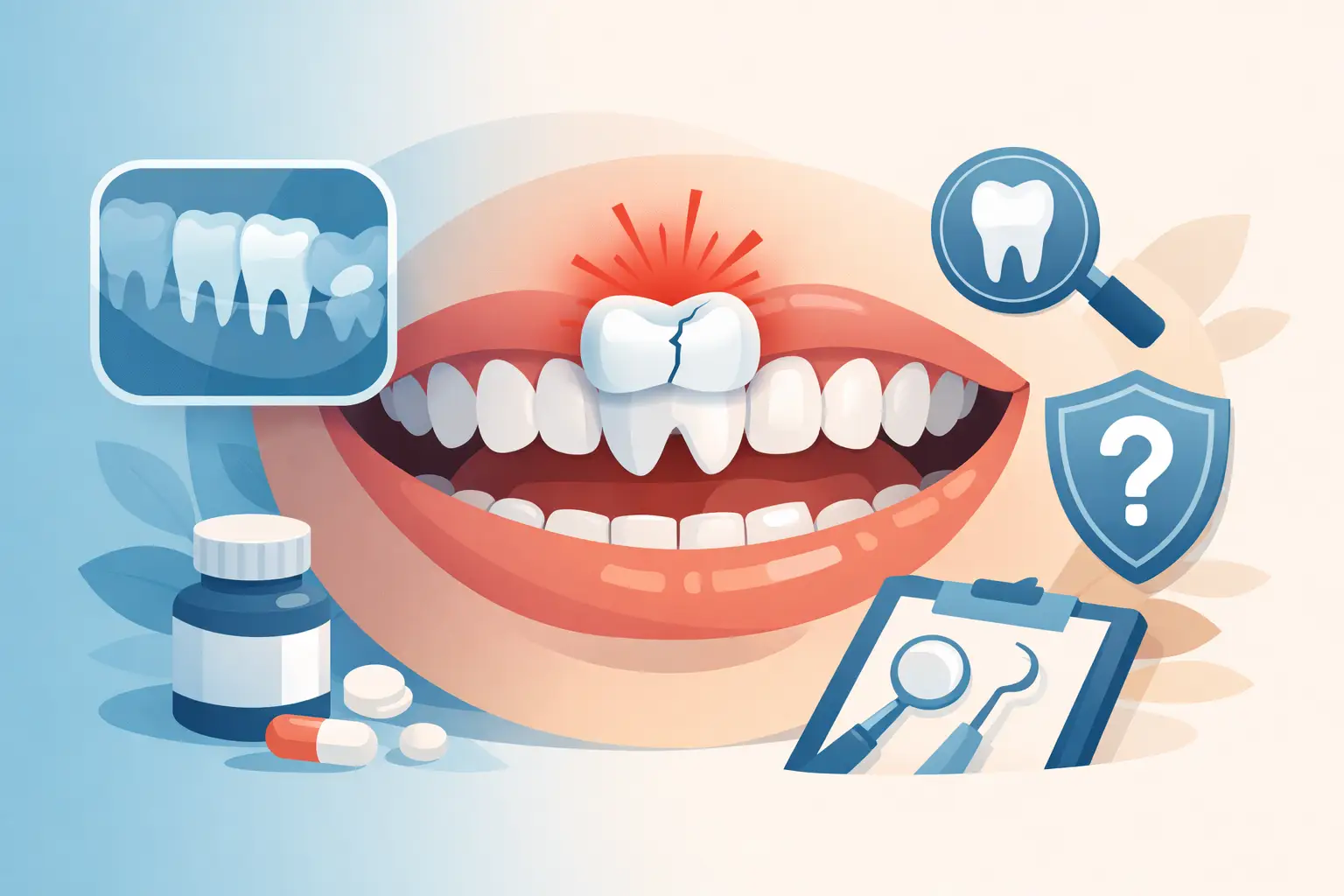
Not every crack feels dramatic. Sometimes the damage is obvious, and sometimes it shows up as pain when biting or sensitivity to cold. Rinse your mouth and save any broken pieces if you can find them. If the area is swollen, use a cold compress and avoid hard foods.
A small chip may not be urgent if there is no pain, but it still deserves prompt evaluation. A larger break, exposed inner tooth structure, bleeding around the tooth, or pain when you bite should be treated as urgent. Teeth do not heal the way skin does. What looks minor can worsen with one more meal or one more night of grinding.
If a Filling, Crown, or Bridge Comes Loose
Lost restorations are common and can be surprisingly uncomfortable. Without that protective layer, the tooth underneath may be sensitive or vulnerable to fracture. Keep the crown or bridge if it comes out, and avoid chewing on that side.
If a crown has simply come loose and the tooth is not badly damaged, a dentist may be able to recement it. If the tooth underneath has decay or has broken, the treatment may be different. Either way, do not ignore it. What starts as an inconvenience can quickly become pain.
If You Notice Swelling, Pus, or a Bad Taste
Swelling around the gums, jaw, or face can point to an infection. So can a pimple-like bump on the gums, pus, fever, pressure, or a foul taste in the mouth. These symptoms should be taken seriously.
An abscess is not something to watch and wait on. Warm salt water rinses may help you stay more comfortable, but they do not remove the infection. Dental treatment is needed, and in some cases the issue may require urgent intervention to protect both your oral health and your general health.
When a Dental Emergency Can Wait – and When It Should Not
Some problems feel scary but are less urgent than they seem. Others look small but need fast care. A mild chipped edge without pain may be able to wait a day or two. Orthodontic irritation from a wire may be manageable short term with dental wax. A lost filling without severe pain is still urgent, but it is usually not the same level of emergency as facial swelling or a knocked-out tooth.
By contrast, severe bleeding that does not stop, trauma after an accident, jaw pain with trouble opening or closing the mouth, or swelling that affects swallowing should be treated immediately. Children, older adults, and people with underlying health conditions may also need faster attention because infection and injury can escalate more quickly.
This is where professional judgment matters. If you are unsure, it is always reasonable to call your dental office and describe exactly what happened, when it started, and what symptoms you have. A caring team can help you decide whether you need same-day treatment, next-day care, or emergency medical evaluation.
How to Handle Dental Emergencies for Children
Parents often have to make fast decisions with limited information, especially when a child is upset or in pain. Start by checking for bleeding, swelling, and whether the injury involves a baby tooth or a permanent tooth. Rinse the mouth gently and use a cold compress outside the face if needed.
If a permanent tooth is knocked out, time matters. If a baby tooth is injured, do not force it back into place. If a child has a cut lip, loose tooth, or mouth injury after a fall, look for signs of head injury too, especially dizziness, vomiting, or unusual sleepiness.
Children may have trouble explaining what hurts, so changes in eating, crying when chewing, refusal to brush, or sudden sensitivity can offer clues. When in doubt, an exam provides reassurance and helps prevent hidden damage from being missed.
What Not to Do During a Dental Emergency
Good intentions can sometimes make the problem worse. Avoid using sharp objects to poke around the tooth or gums. Do not place aspirin directly on the tissue. Do not ignore swelling, especially if it is getting larger. Do not assume pain will pass just because it eases for a few hours.
It is also best not to postpone care because you are worried the treatment will be complicated or expensive. In many cases, early treatment is simpler, more comfortable, and less costly than waiting. A small crack can become a split tooth. A minor cavity can become an infection. Prompt care protects both your health and your options.
Prevention Helps, but Quick Action Matters Most
Mouthguards for sports, regular checkups, and treating small issues early all reduce your risk of urgent dental problems. Even so, accidents happen. Fillings wear out. Teeth crack. Infections flare up at the worst times.
That is why having a plan matters. Know who to call. Keep your dentist’s number accessible. If someone in your home plays sports, keep a small dental emergency kit with gauze, a clean container, and cold packs. These simple steps can make a stressful moment feel more manageable.
At Amor Dental Arts, we understand that urgent dental problems come with both pain and worry. Patients do better when they feel informed, listened to, and cared for quickly. If a dental emergency happens, the most helpful thing you can do is act early, protect the area, and reach out before a temporary problem has the chance to become a bigger one.